The Hardware Store Hack: 5 Construction Materials Used in Luxury Window Displays
While we strive to credit all original designers, some archival images remain uncredited. Please contact us for proper attribution.
Additionally, this post may contain affiliate links to our recommended materials, meaning the studio may earn a small commission at no extra cost to you.
The biggest misconception in retail design is that a show-stopping window display requires a massive, luxury budget.
As a Retail & Experience Designer, I can tell you a secret: visual impact rarely comes from expensive custom props. It comes from intention, scale, and what we call "Visual Disruption." You can take the most ordinary, inexpensive industrial object and arrange it with strict architectural precision to transform it into a high-end art installation.
If you want to elevate your storefront without draining your marketing budget, look no further than your local hardware store. Here are 5 accessible construction materials that look incredibly expensive when styled right—and the exact designer rules to use them.
1. HVAC DUCTING & INDUSTRIAL PIPES AS FUTURISTIC PROPS
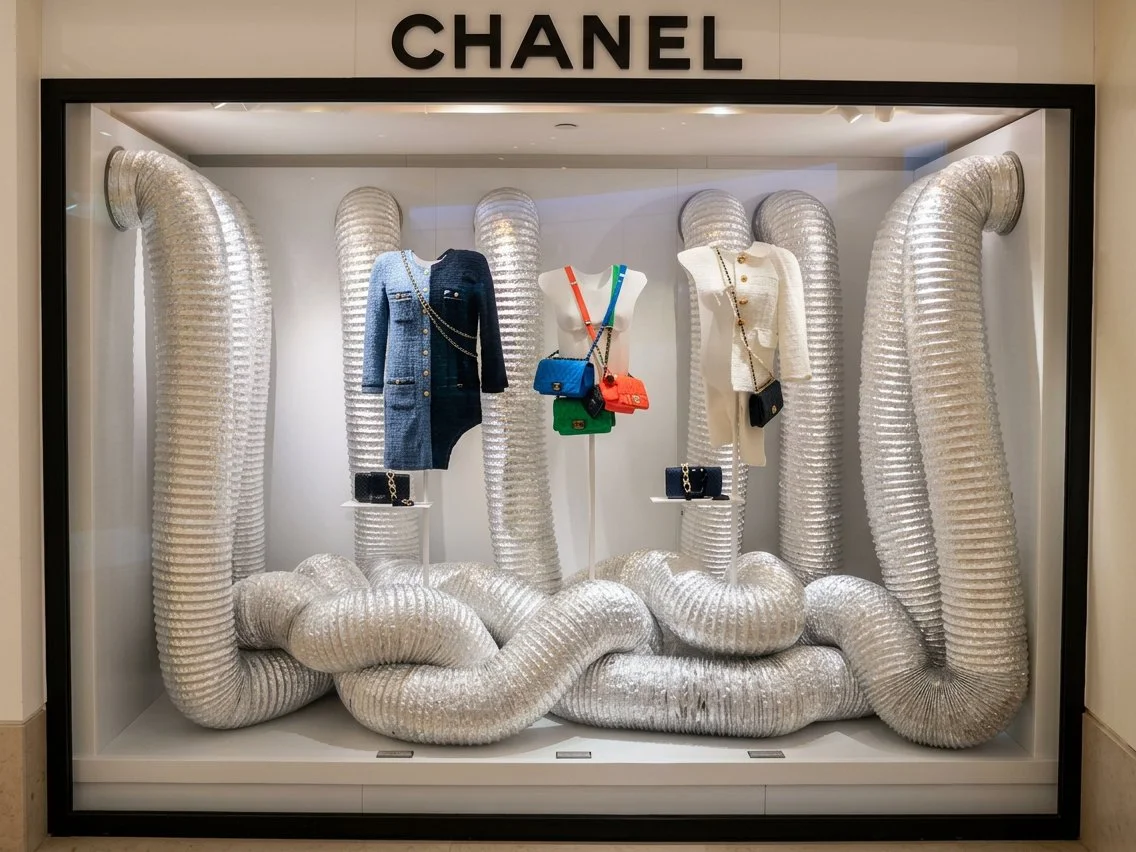
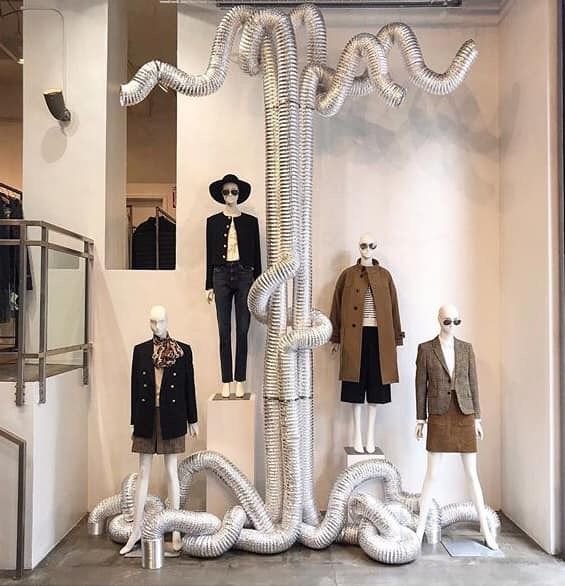
What is usually hidden in the ceiling can become a spectacular centerpiece. Flexible ducting is highly malleable, allowing you to create organic, winding shapes that guide the customer's eye exactly where you want it.
The Futuristic Vibe
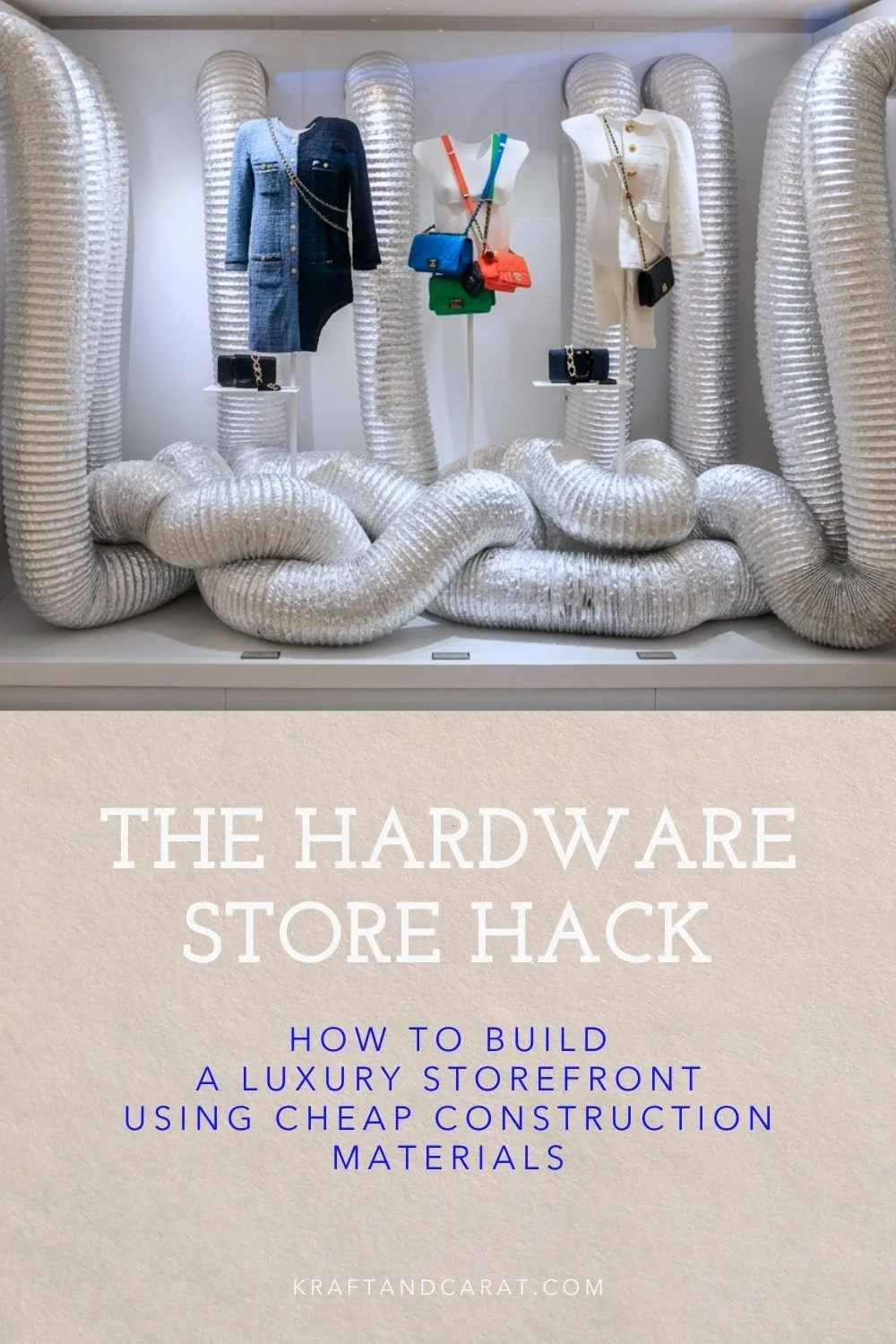
Silver aluminum hoses catch the storefront lighting beautifully, acting like a high-end metallic sculpture (a technique brilliantly used by brands like Chanel).
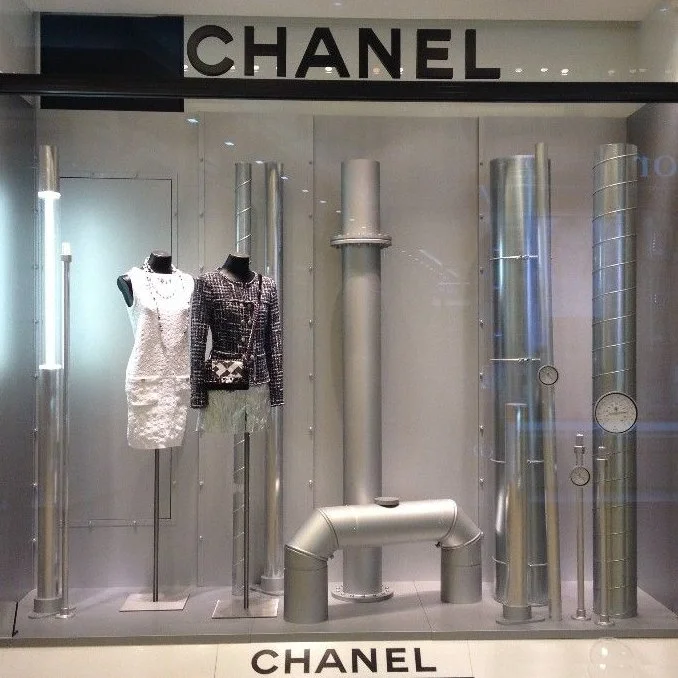
If the malleability scares you, opt for rigid chrome plumbing pipes. By playing with different diameters and assembling them into geometric patterns, you can build a flawless, architectural grid.
The Avant-Garde Vibe
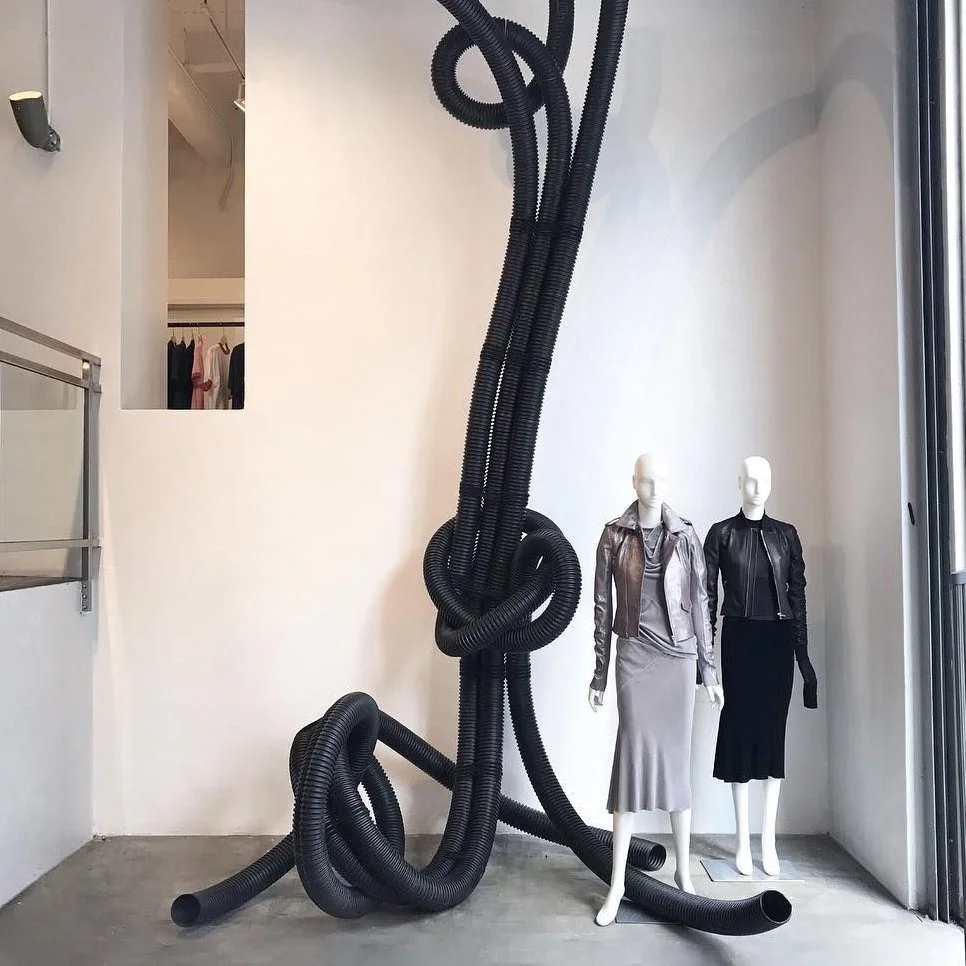
If you want a darker, moodier aesthetic, use black corrugated plastic drainage pipes. It creates an edgy, subterranean atmosphere perfect for streetwear or niche perfumery.
⨁ Shop the Studio's selection to recreate the look!
Chanel, Paris (photo Kraft & Carat) ⨳ Jeffrey, New York (source unknown) ⨳ Chanel (source unknown)
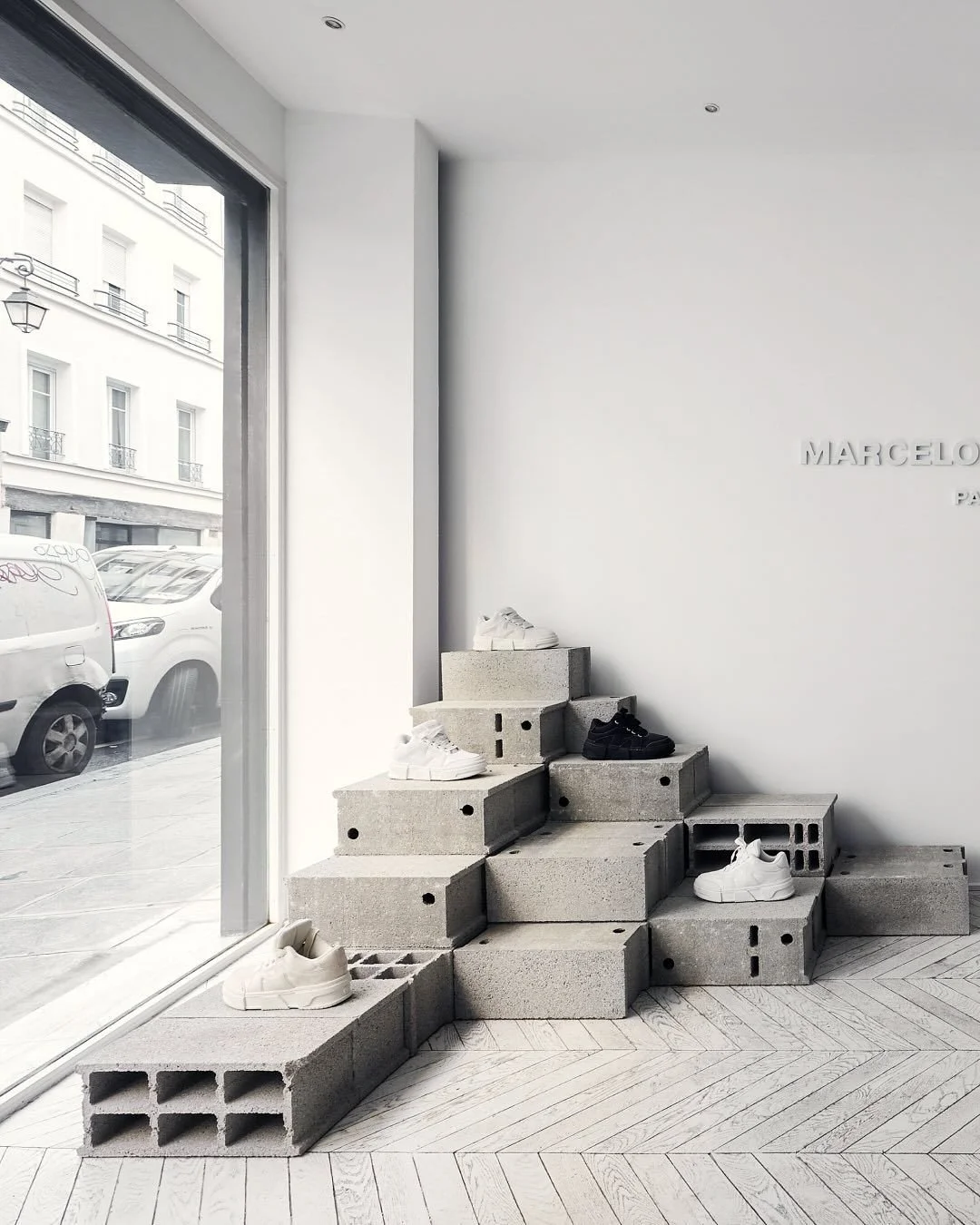
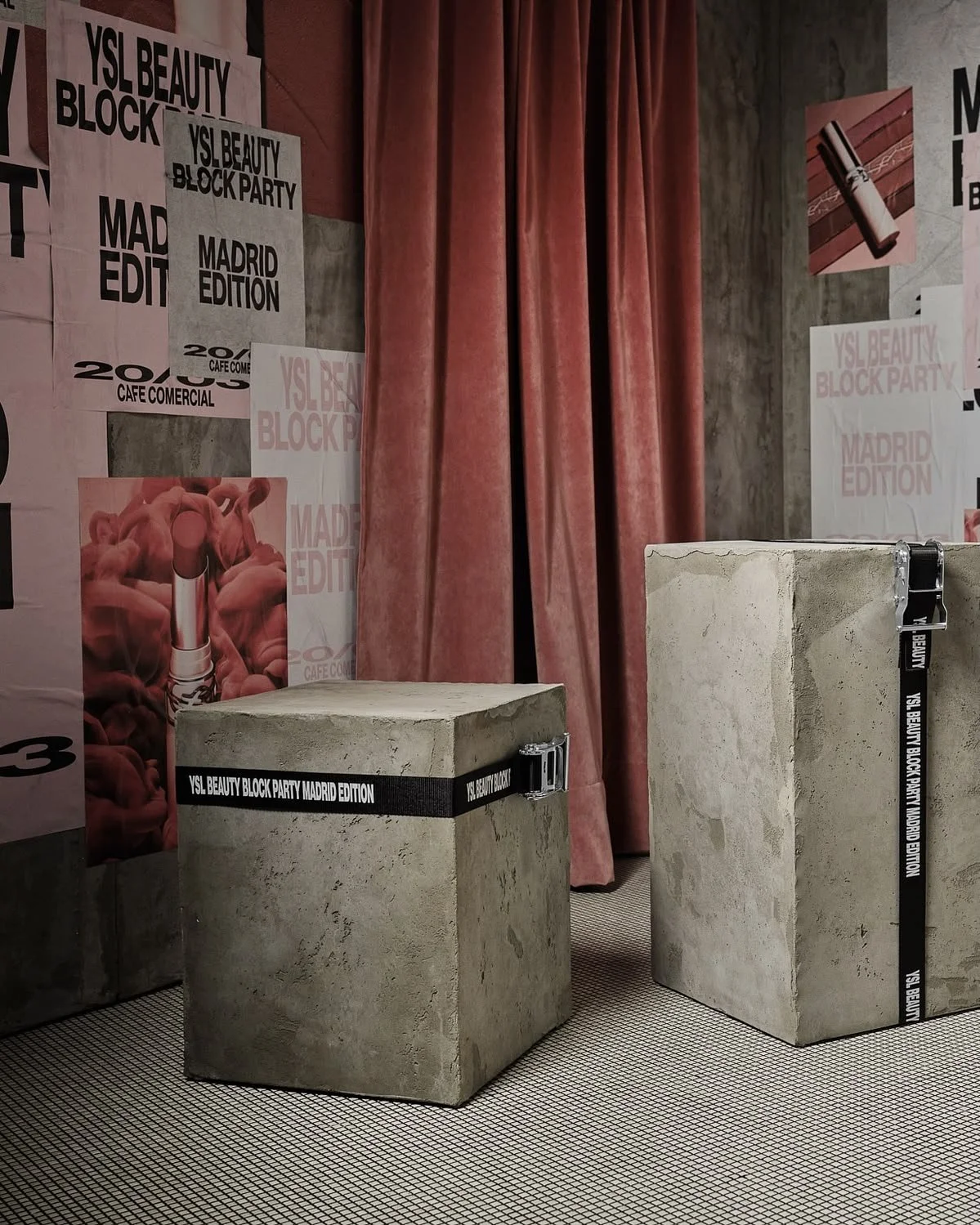
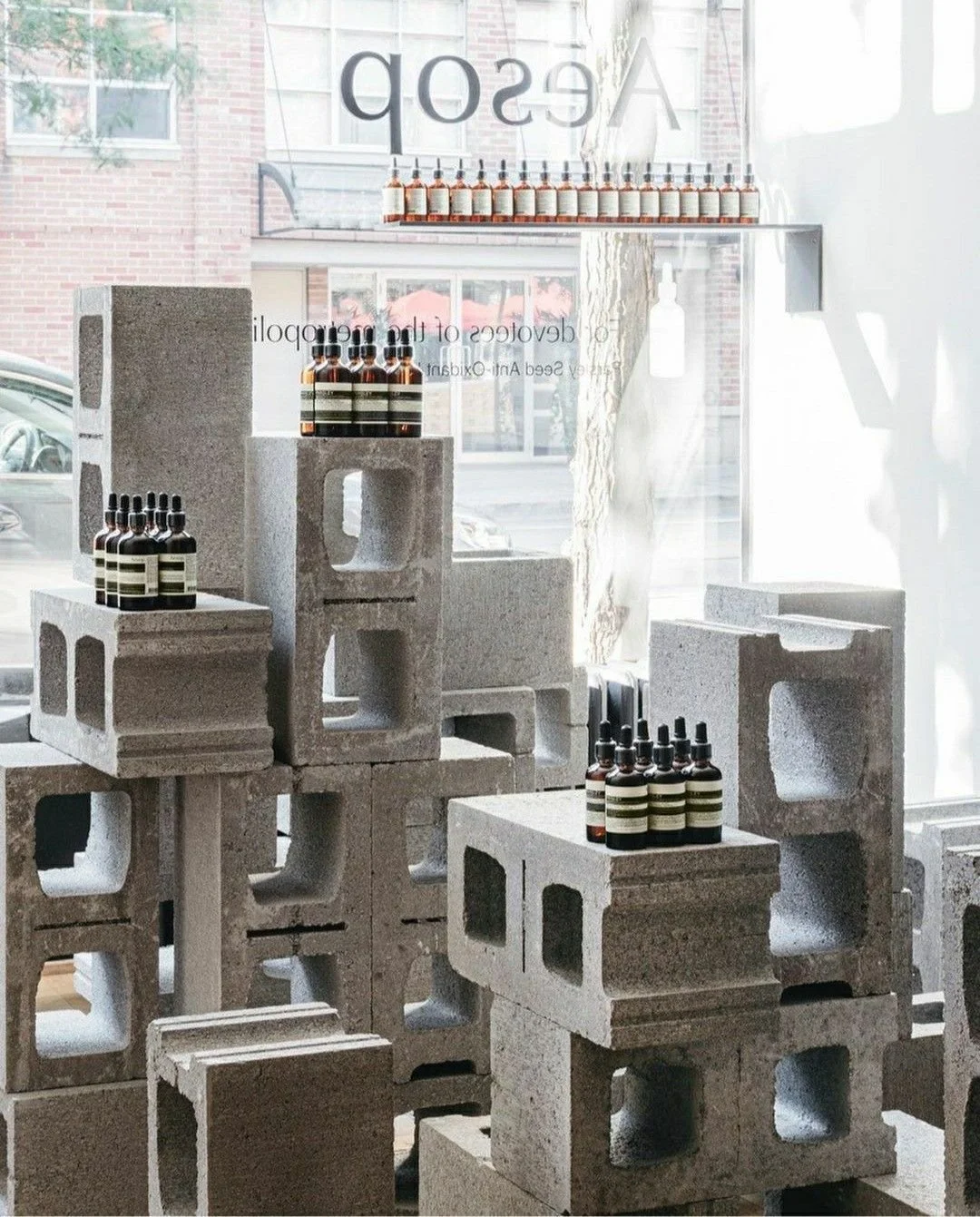
2. CONCRETE CINDER BLOCKS AS BRUTALIST DISPLAY RISERS
Cinder blocks are the ultimate staple of the brutalist aesthetic. While they make literal sense for styling a streetwear or sneaker brand, their true visual power is unlocked when used in total opposition to the product.
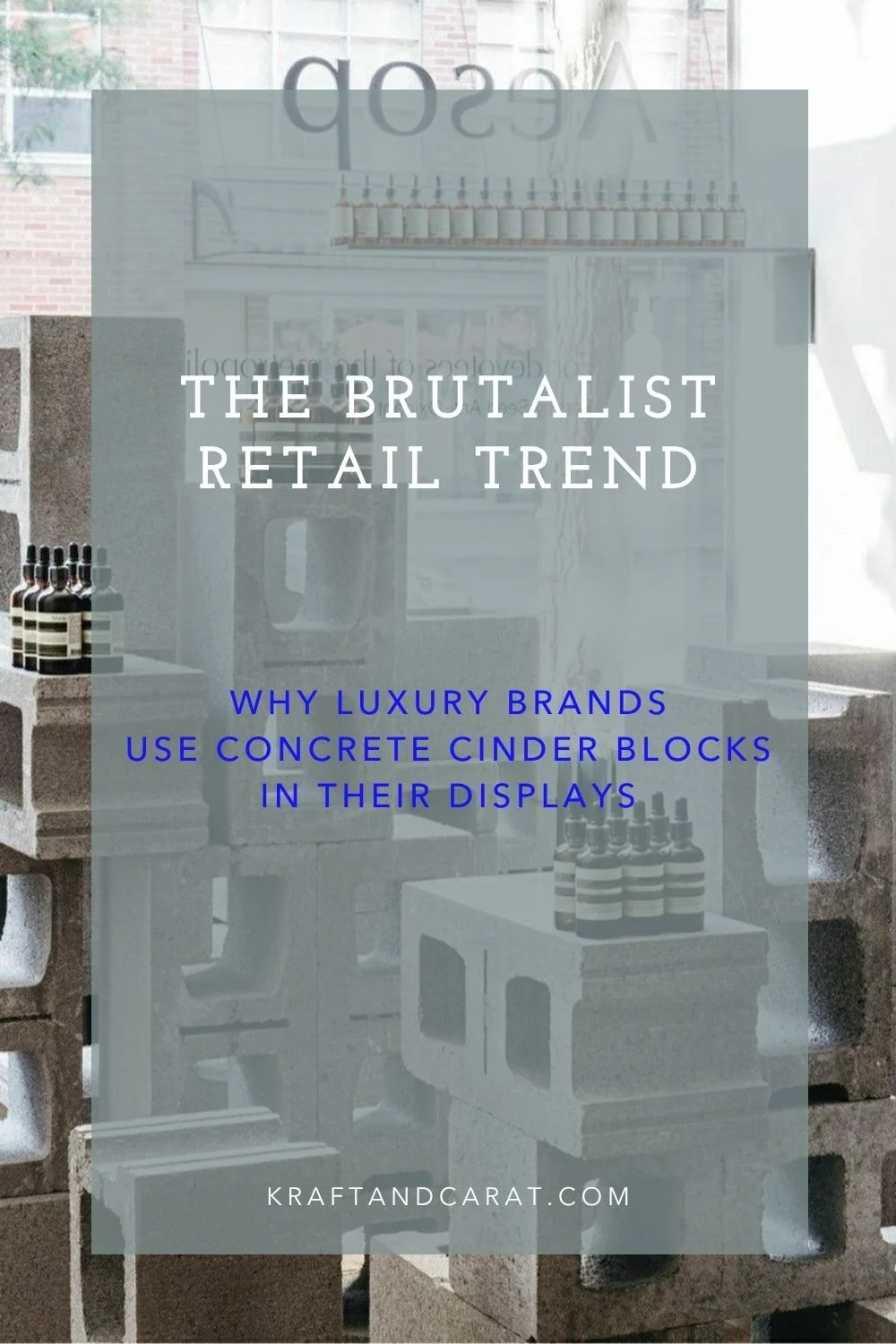
⨁ The Secret: The magic happens when you place something incredibly delicate—like a glass perfume bottle, fine jewelry, or a luxury leather bag—on a rough, porous concrete block (an aesthetic often mastered by brands like Aesop or YSL Beauty). This extreme textural contrast drastically elevates the perceived value and fragility of the luxury item.
Marcelo Miracles, Paris (courtesy Behance) ⨳ YSL Beauty, Madrid (courtesy Instagram) ⨳ Aesop (source unknown)
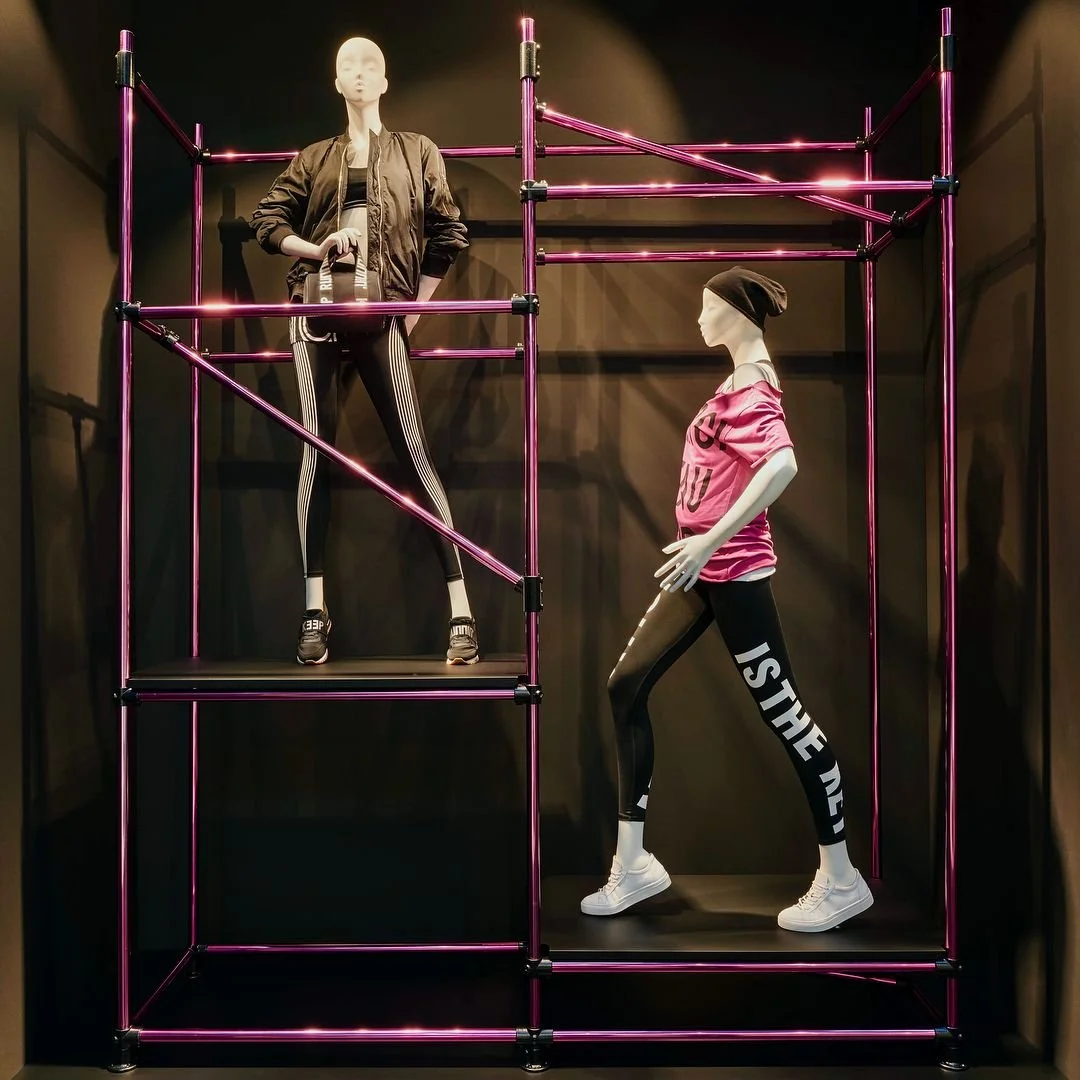
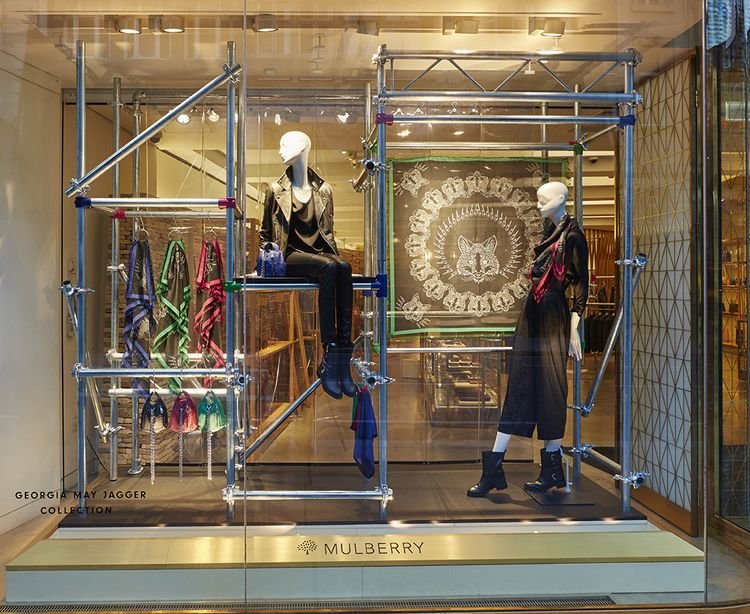
3. SCAFFOLDING STRUCTURES AS VERTICAL MERCHANDISING
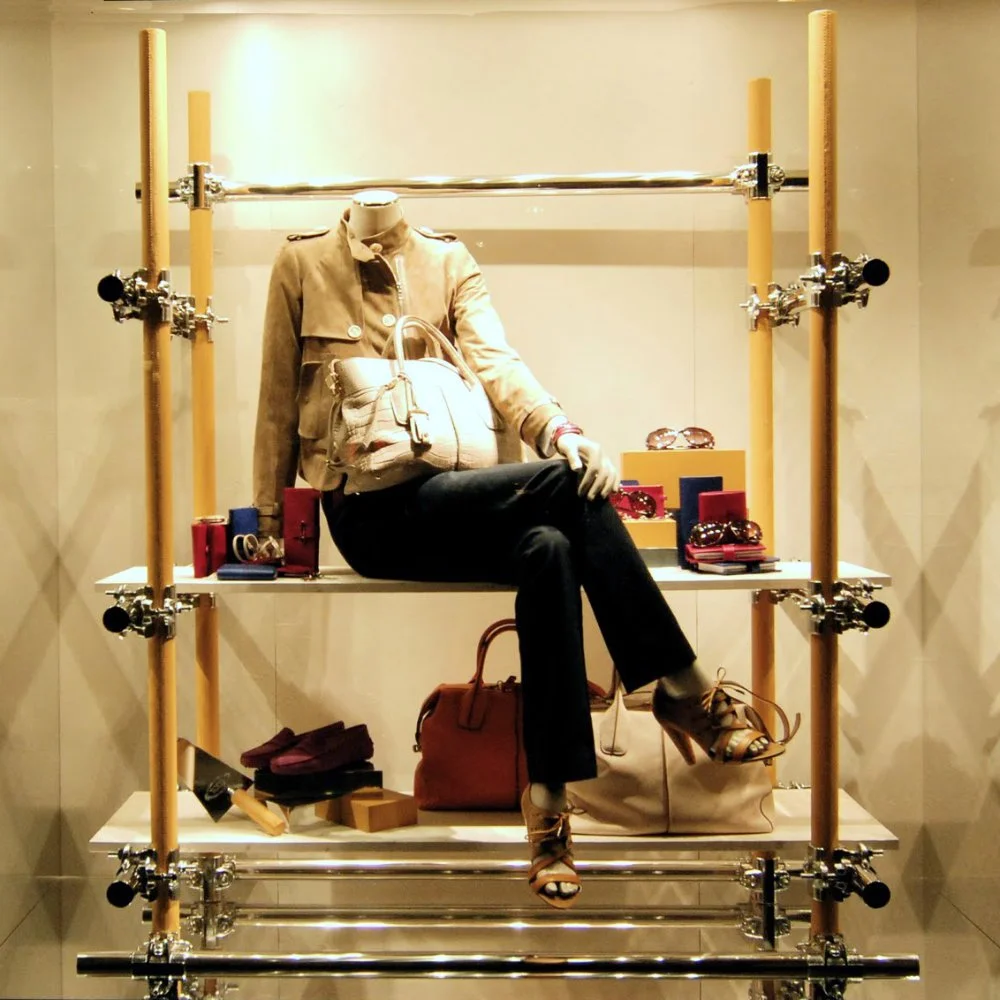
If you have a massive, high-ceiling storefront to fill, custom woodwork will ruin your budget. Scaffolding is the ultimate architectural solution. It allows you to play with multi-level product displays—mixing hanging items, seated mannequins, and standing forms—effortlessly filling large vertical voids.
✎ PRO TIP: Unless you want a raw, underground look, don't leave the metal as is. Spray-paint the entire structure in a matte monochromatic color (like deep navy, bright yellow, or brushed gold). It instantly turns cheap construction gear into a bespoke, high-end display unit.
✘ THE LOGISTICS CHECK: While this rule applies to all props, it is absolutely critical here: always double-check your window dimensions and access points before sourcing materials. Scaffolding pipes are rigid and bulky. Make sure you can physically maneuver the pieces through your store doors and assemble them within the confined depth of your window display!
⨁ Shop the Studio's selection to recreate the look!
Tod’s (photo Kraft & Carat) ⨳ ? (source unknown) ⨳ Mulberry (source unknown)
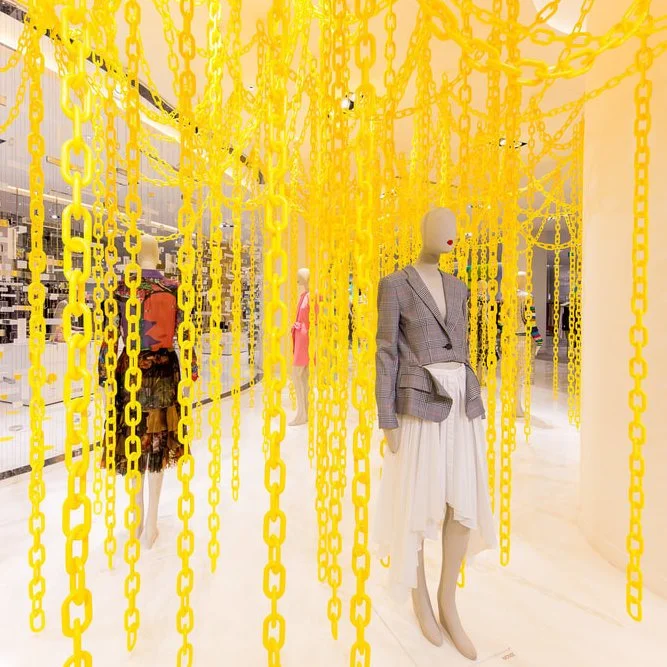
4. HIGH-VIS SAFETY GEAR AS SHOW STOPPER
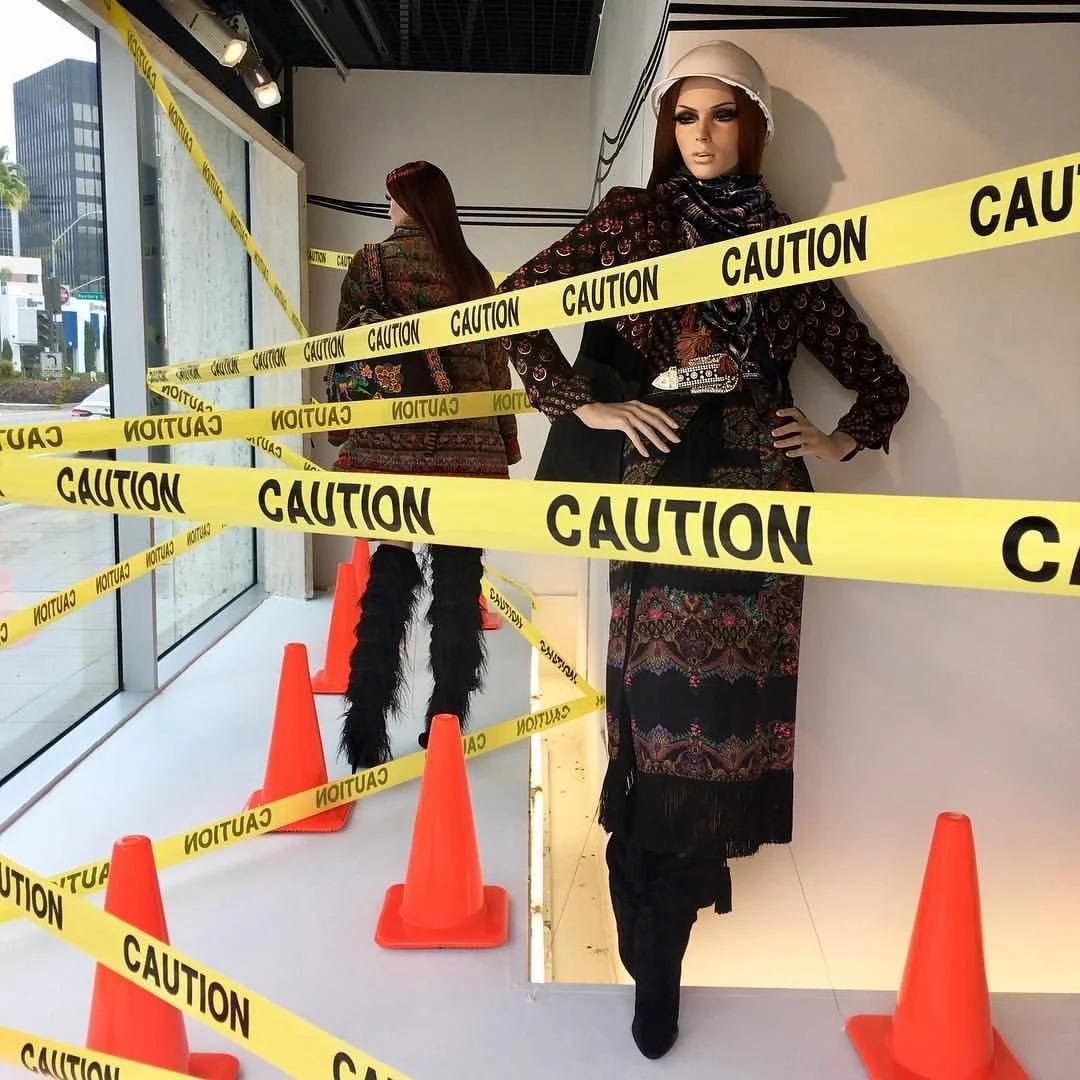
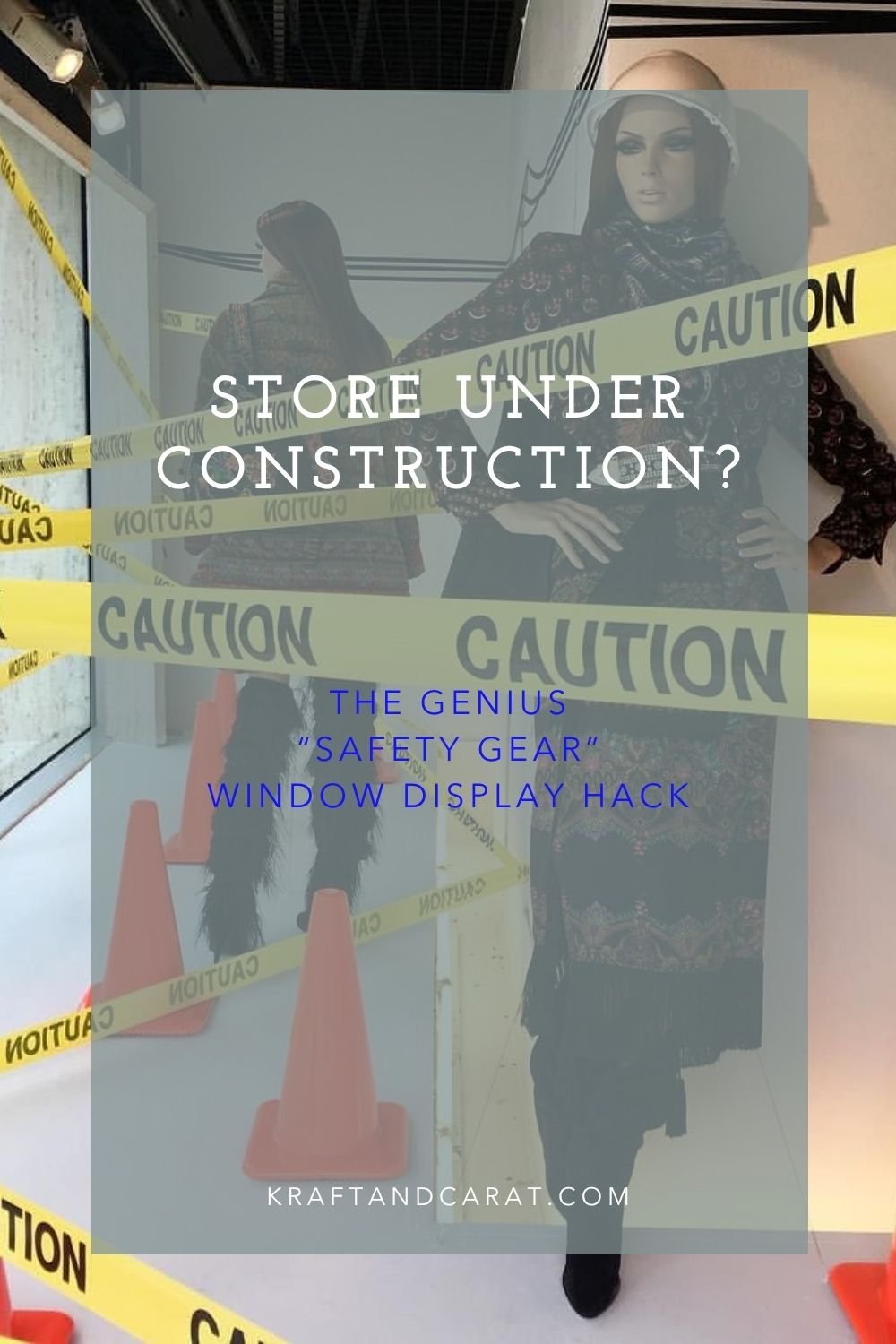
Nothing screams "Stop and look" faster than high-visibility neon colors. Luxury brands love to use caution tape, plastic safety chains, or even traffic cones as a form of industrial irony.
⨁ The Secret: It is an incredibly cheap way to create a massive color-block effect. The neon yellow or orange acts as a visual magnet from across the street. The juxtaposition of a cheap, bold "CAUTION" message with a highly expensive luxury product creates a disruptive, playful narrative that stops foot traffic immediately.
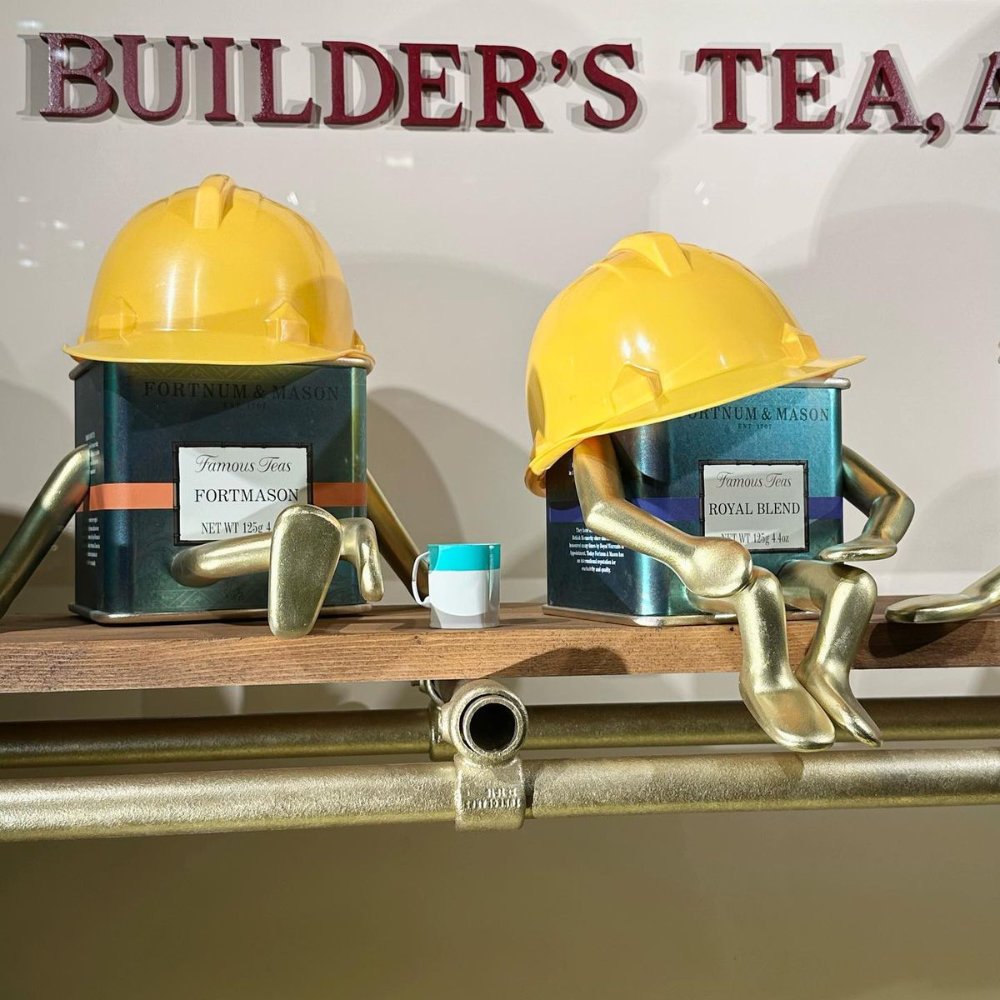
✎The Renovation Hack: Is your storefront or interior undergoing construction? Lean into it! Instead of hiding behind ugly hoarding boards, use safety codes to your advantage. British luxury department store Fortnum & Mason did this brilliantly by styling miniature figures in tiny hard hats and high-vis vests among their products. It’s a humorous, highly engaging way to tell your customers "Pardon our dust, we are still open!" while keeping the window visually spectacular.
⨁ Shop the Studio's selection to recreate the look!
hard hat (why not choose a pink color to stand out?…)
Neiman Marcus, Los Angeles (source unknown) ⨳ Fortnum & Mason, London (courtesy facebook) ⨳ Hudson Bay, Toronto (courtesy Helen Krispis)
5. CARPET RUNNERS AS ORGANIC PROPS
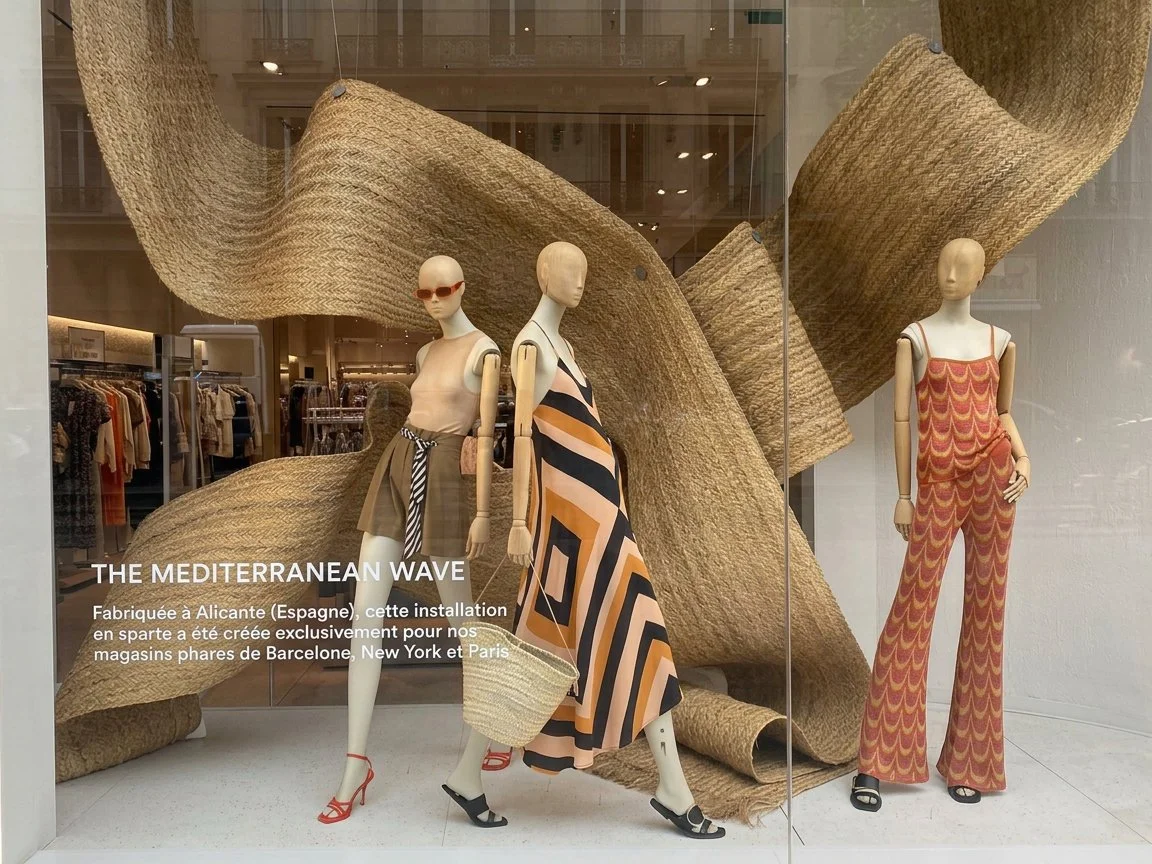
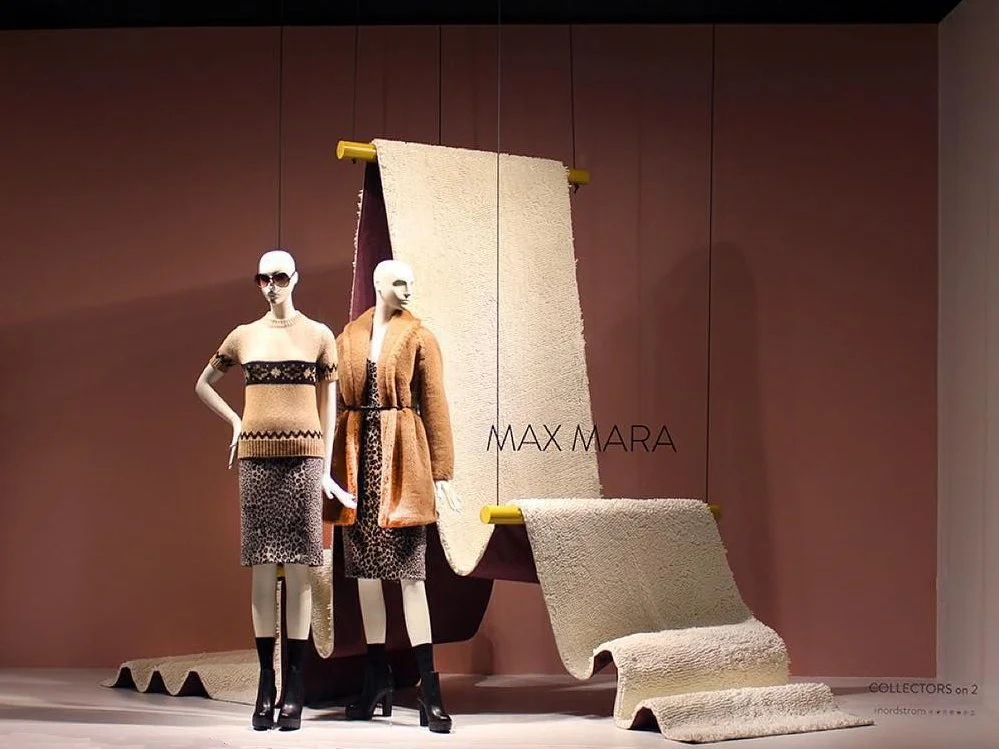
Skip the expensive upholsterer. A simple, narrow staircase carpet runner is one of the best tools to bring movement to your window. Because it is already cut to a narrow width, it perfectly fits the shallow depth of a storefront without requiring any cutting or hemming.
The Secret: Instead of laying it flat on the floor, use a few suspension points to hang it from the ceiling down to the ground. This creates a flowing, sculptural 3D wave. The material dictates the season: a thick wool runner evokes cozy winter depth, while a raw sisal or rattan runner screams summer Riviera. It gives your storefront instant architectural movement with zero building costs.
⨁ Shop the Studio's selection to recreate the look!
Mango, Paris (photo Kraft & Carat) ⨳ Nordstrom (source unknown)
6. MORE MONOCHROMATIC & SERIES IDEAS TO MAKE YOUR WINDOW DISPLAY POP
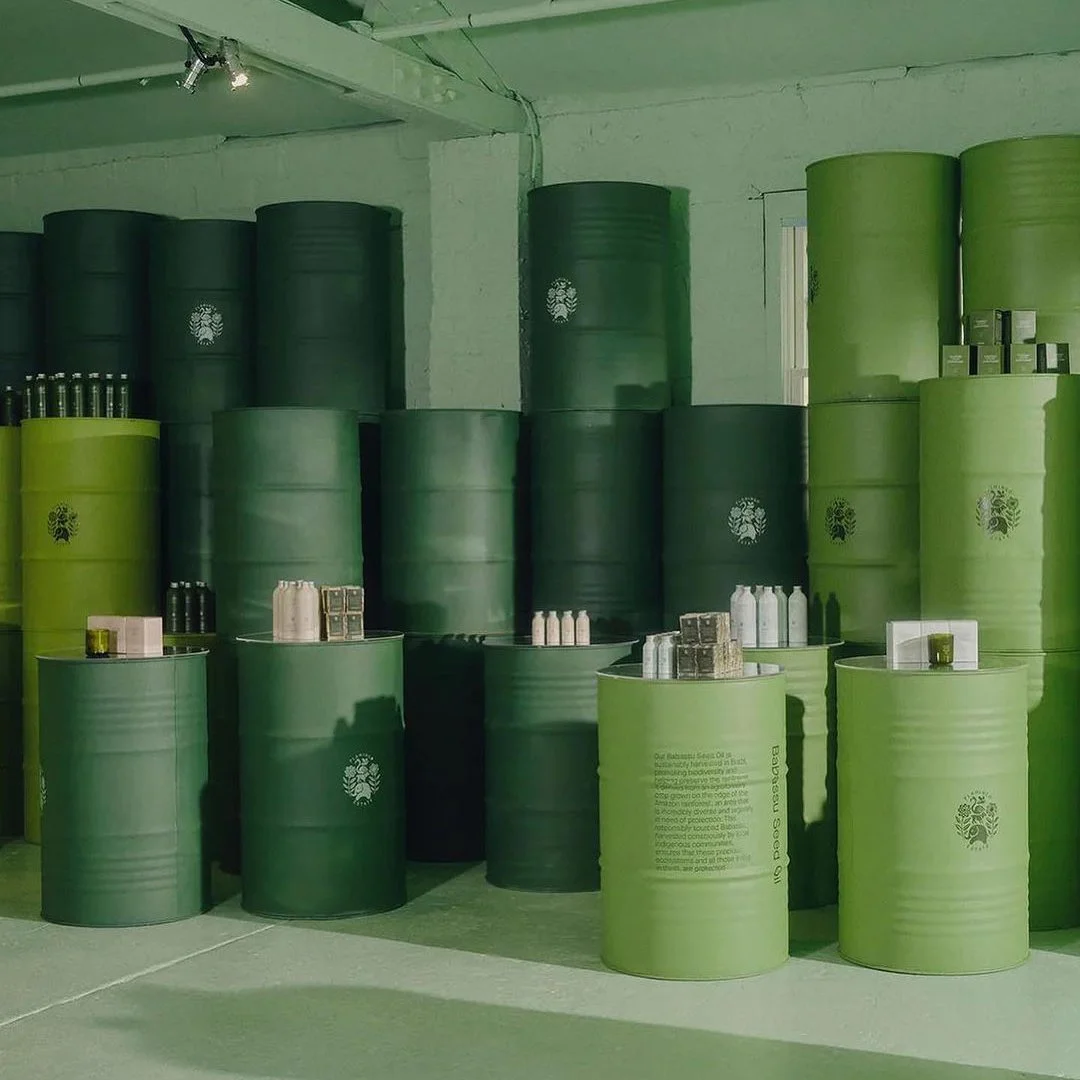
Sometimes, the most mundane or heavy-duty industrial items can become the ultimate luxury props—provided you apply a strict color strategy. Paint and repetition are your best tools to strip away the "cheap" or "dirty" utility of a hardware object, elevating it to an abstract, high-end display piece.
The Gradient Effect (Oil Barrels): Take the Mytheresa x Flamingo Estate pop-up, where rough industrial oil drums were repurposed as display podiums. By painting them in a cohesive, tonal gradient of lush greens, they transformed heavy industrial waste into a chic, botanical-inspired installation.
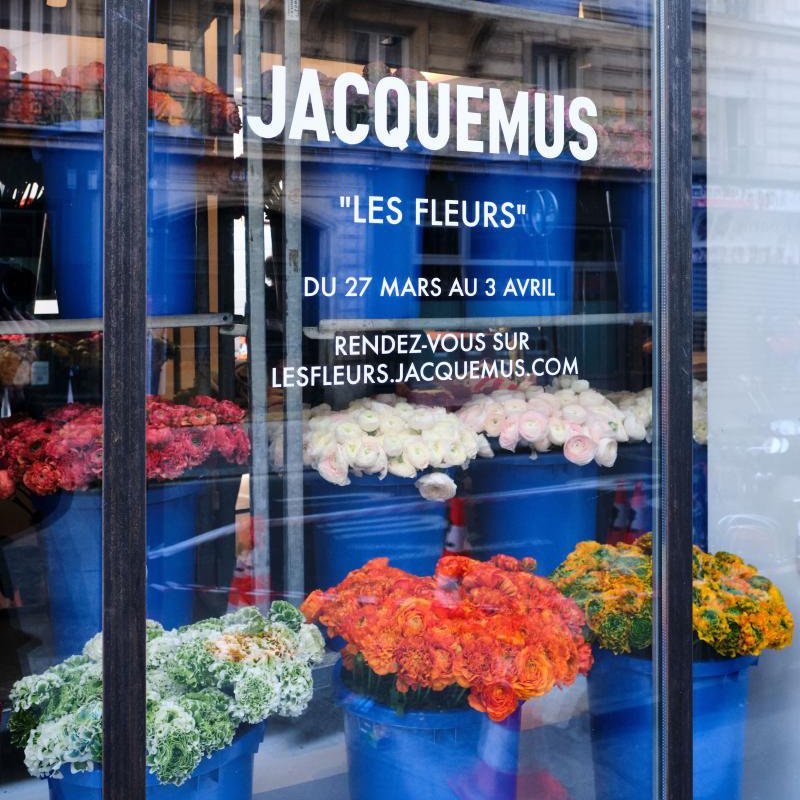
The Art of Repetition (Plastic Buckets): Jacquemus is a master of turning the ordinary into the extraordinary. A simple, cheap plastic utility bucket looks like a dollar-store purchase on its own. But align dozens of them in a striking, monochromatic bright blue, and it instantly becomes a high-fashion, pop-art statement.
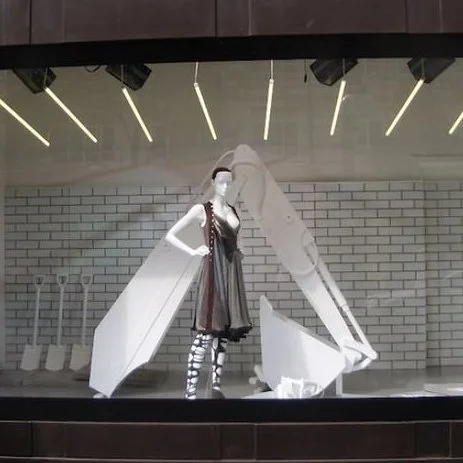
The Sculptural White-Out (Heavy Machinery): In a brilliant display at Selfridges, a massive mechanical excavator arm was placed in a storefront. The genius move? They painted the heavy machinery entirely stark white, perfectly matching an all-white window display. By erasing its raw, yellow-and-black industrial colors, the mechanical arm lost its aggressive nature and became a sleek, contemporary, avant-garde sculpture.
✧ The Studio Secret: If you find a cheap prop with an interesting architectural shape (a bucket, a ladder, a PVC pipe) but an ugly finish, buy a can of premium matte spray paint. A thick coat of monochromatic paint—whether it's a bold primary color or a clinical stark white—instantly erases its original purpose and turns it into custom gallery art.
So, just go to your favorite hardware store and think how you can repurpose any construction material!
⨁ Shop the Studio's selection to recreate the look!
MyTheresa x Flamingo Estate, Hampton (courtesy MyTheresa) ⨳ Selfridges, London (courtesy Prop Studios) ⨳ Jacquemus, Paris (courtesy PAF atelier)
READY TO ELEVATE YOUR STOREFRONT?
Sourcing the right props is only 20% of the work. The remaining 80% comes down to spatial composition, focal points, and lighting. Even the most beautiful industrial installation will fall flat if the storefront foundations are wrong.
Before you start hanging aluminum pipes, ensure your display meets premium standards.
Pin for inspiration, or share these retail strategies with your network.