The Fabric Hack: How to Fill a Large Storefront on a Small Budget
While we strive to credit all original designers, some archival images remain uncredited. Please contact us for proper attribution.
Additionally, this post may contain affiliate links to our recommended materials, meaning the studio may earn a small commission at no extra cost to you.
It is the most common dilemma in retail design: You have a massive, deep storefront window, but your products are small, and your prop budget is even smaller. How do you fill that empty void without making the display look cheap or cluttered?
Empty space is the enemy of an immersive brand experience. If you want to create a monumental, theatrical impact without commissioning expensive custom woodwork or resin props, the answer lies in a single, incredibly versatile material: Fabric.
From heavy theatrical velvet to ethereal tulle clouds, textiles offer the highest "volume-to-price" ratio in visual merchandising. Here is how luxury houses manipulate fabric to command attention, and how you can apply these 3 aesthetic strategies to your own boutique.
01. DRAPED WINDOW DISPLAYS (Mastering Gravity & Color)
The traditional curtain is anything but boring when executed with bold intentionality. The secret here is committing fully to a specific material and a radical color palette.
The Theatrical Color Block
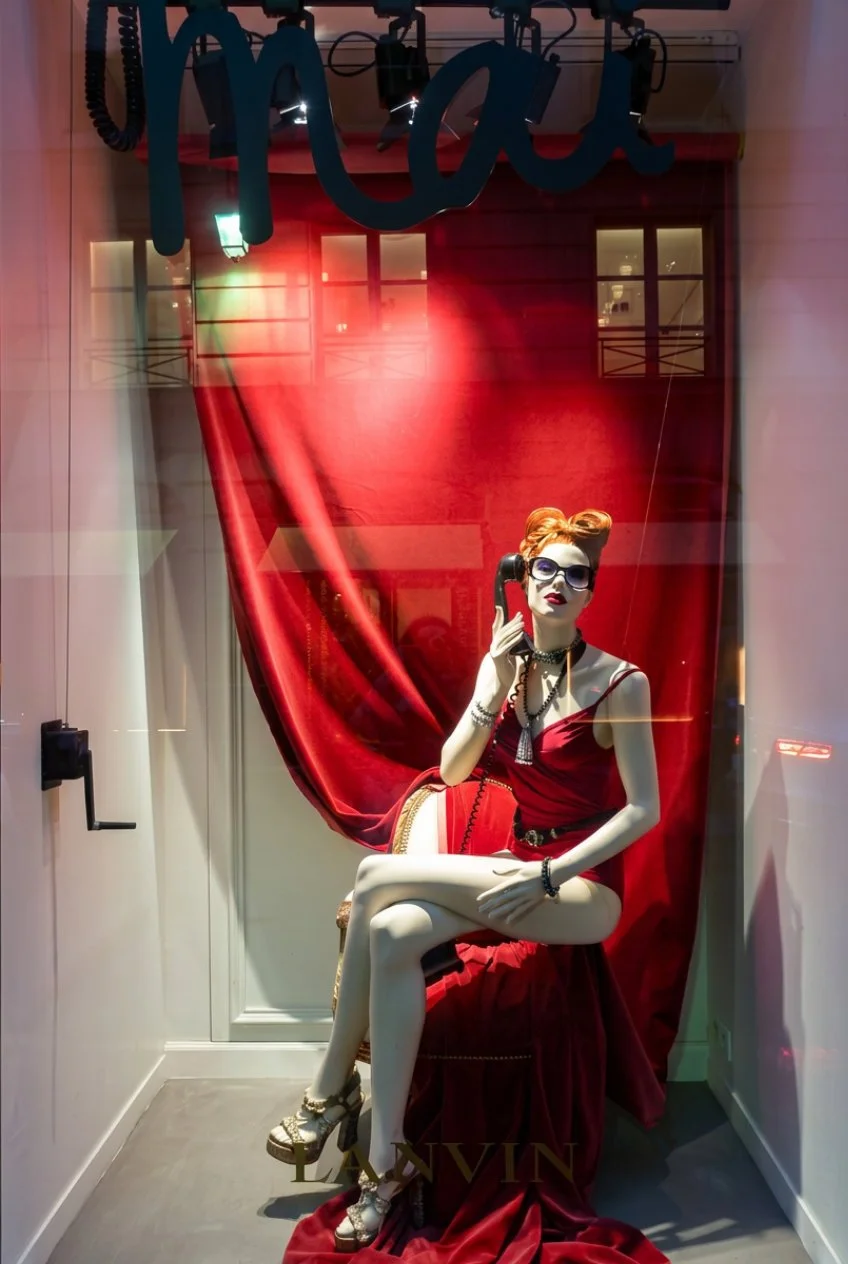
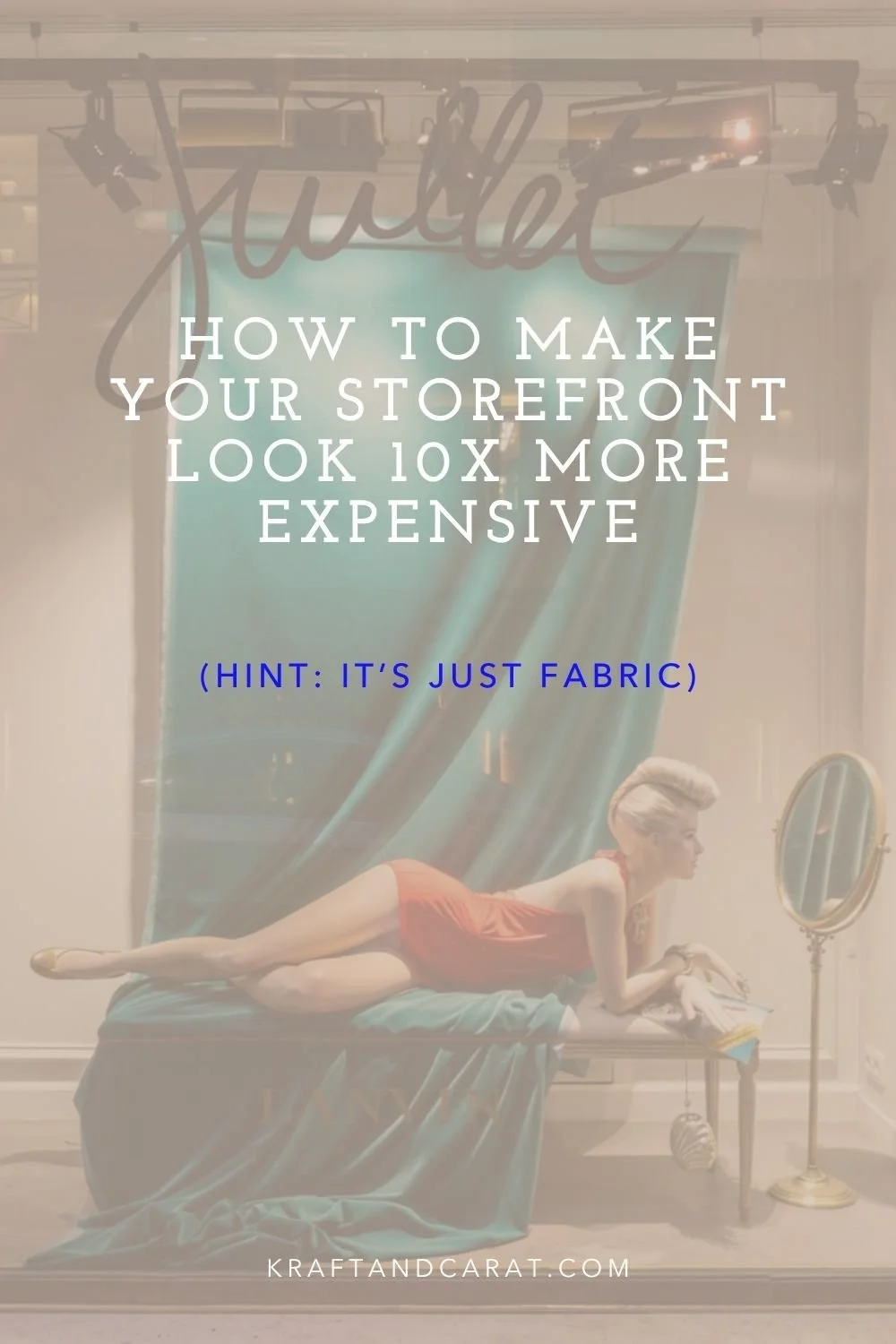
Lanvin masterfully uses heavy velvet curtain in striking, saturated colors to create dramatic, closed backdrops. This instantly creates a luxurious jewelry-box effect, forcing the eye directly onto the product.
The Architectural Minimalist
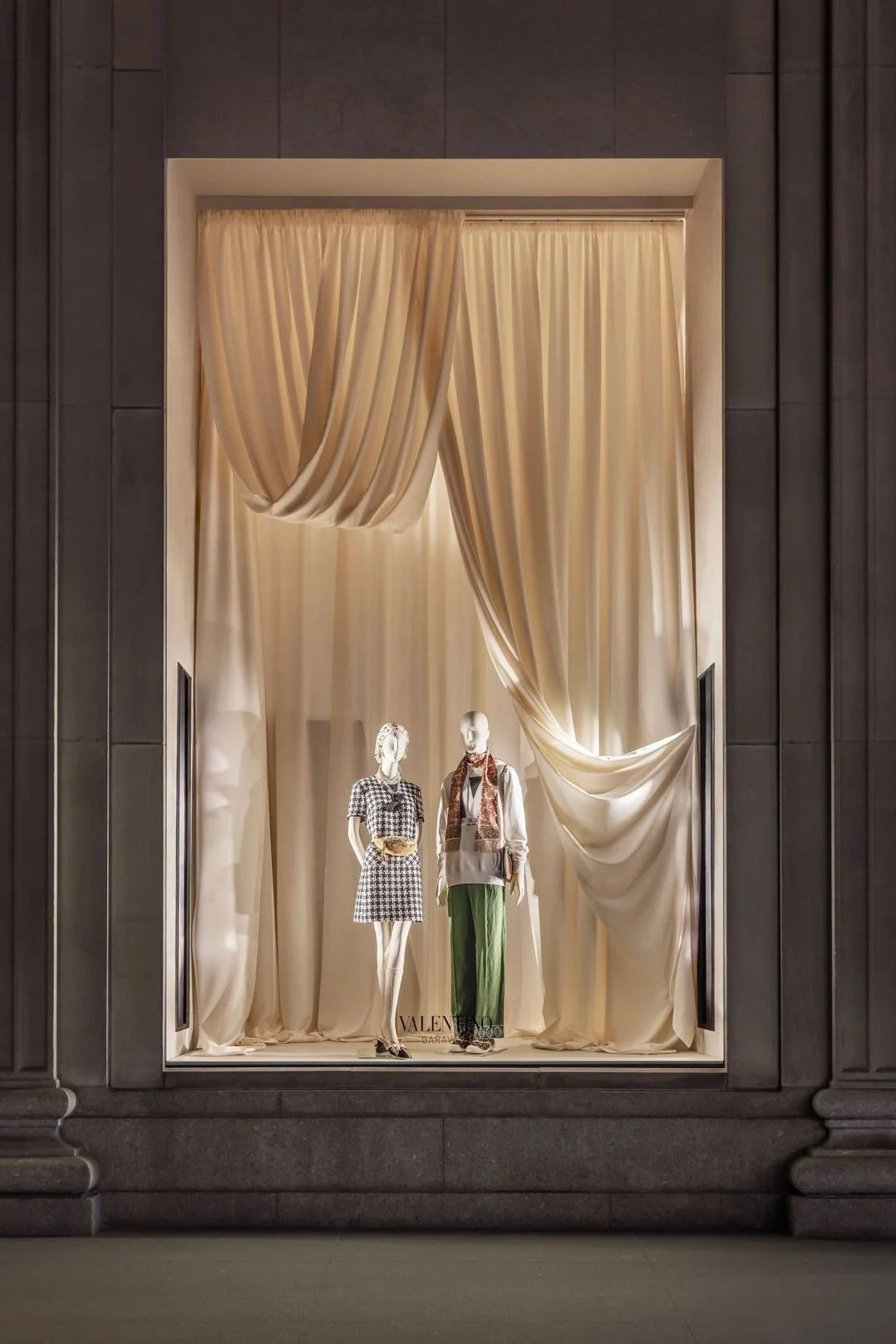
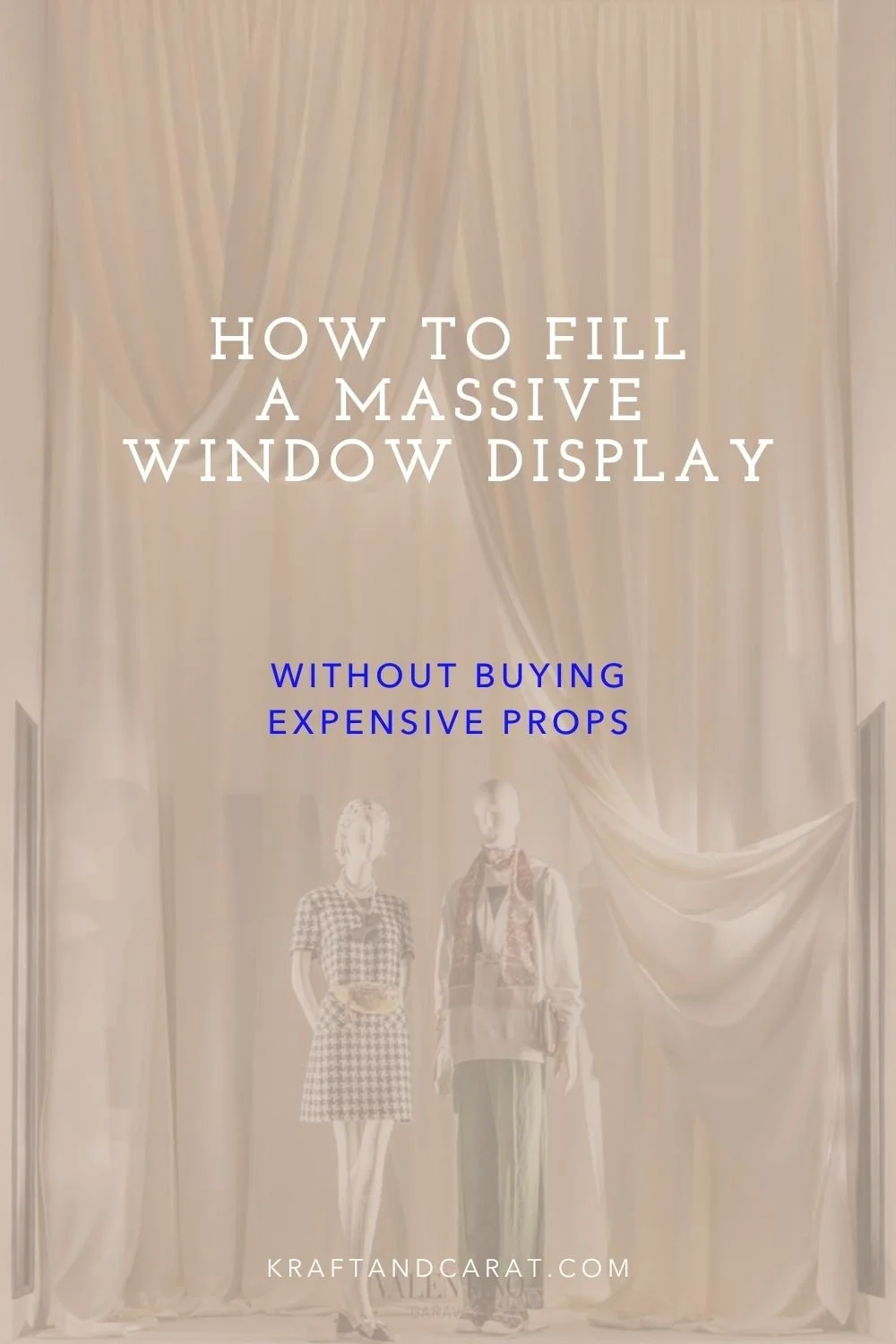
Valentino (New York) took the opposite approach with an all-over white display. By using tightly pleated, heavy white fabric, they turned a simple drape into a structured, architectural column.
The Ethereal Layers
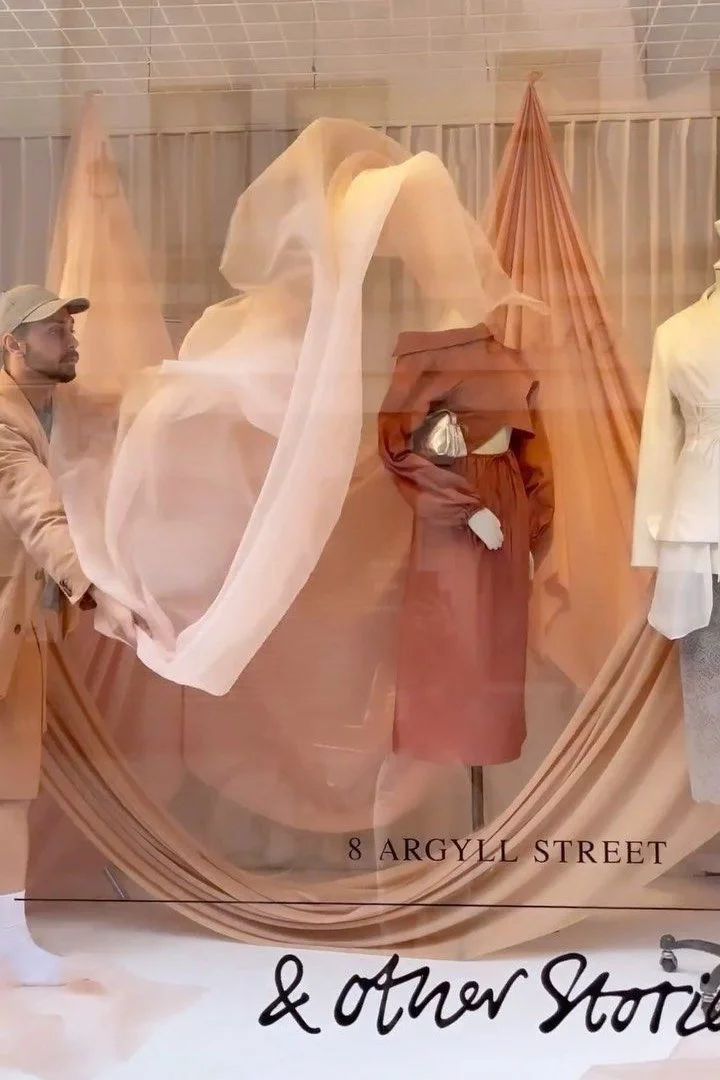
& Other Stories layered tonal pink and beige organza to create an airy, ultra-feminine, and translucent background.
✧ The Studio Exception (Selfridges 2016)
While the golden rule of luxury draping is to keep it simple (let it puddle on the floor, no cheap patterns, no tie-backs), rules are made to be broken. In 2016, Selfridges used heavily ruched, metallic gold "balloon" drapes—a style that usually looks outdated. However, by contrasting this vintage technique with a hyper-modern neon sign reading "Always", they transformed a tacky drape into a brilliant piece of visual disruption.
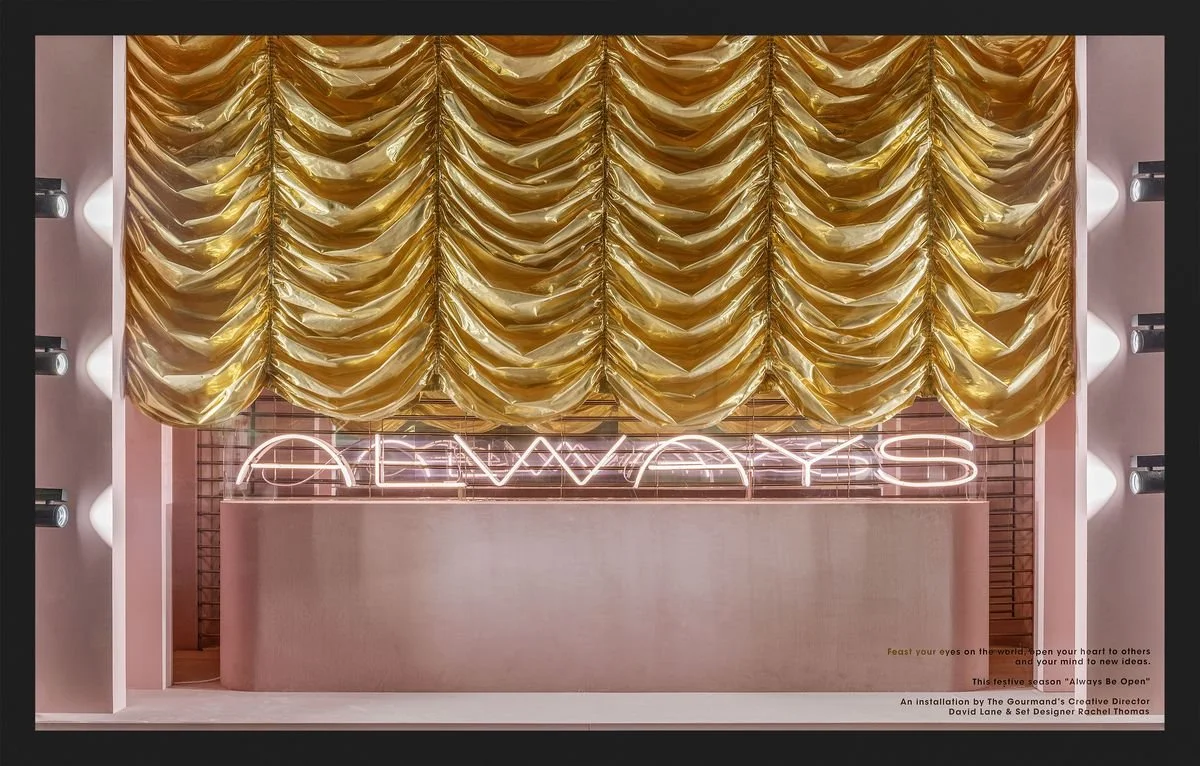
Selfridges, christmas 2016 (source etnow)
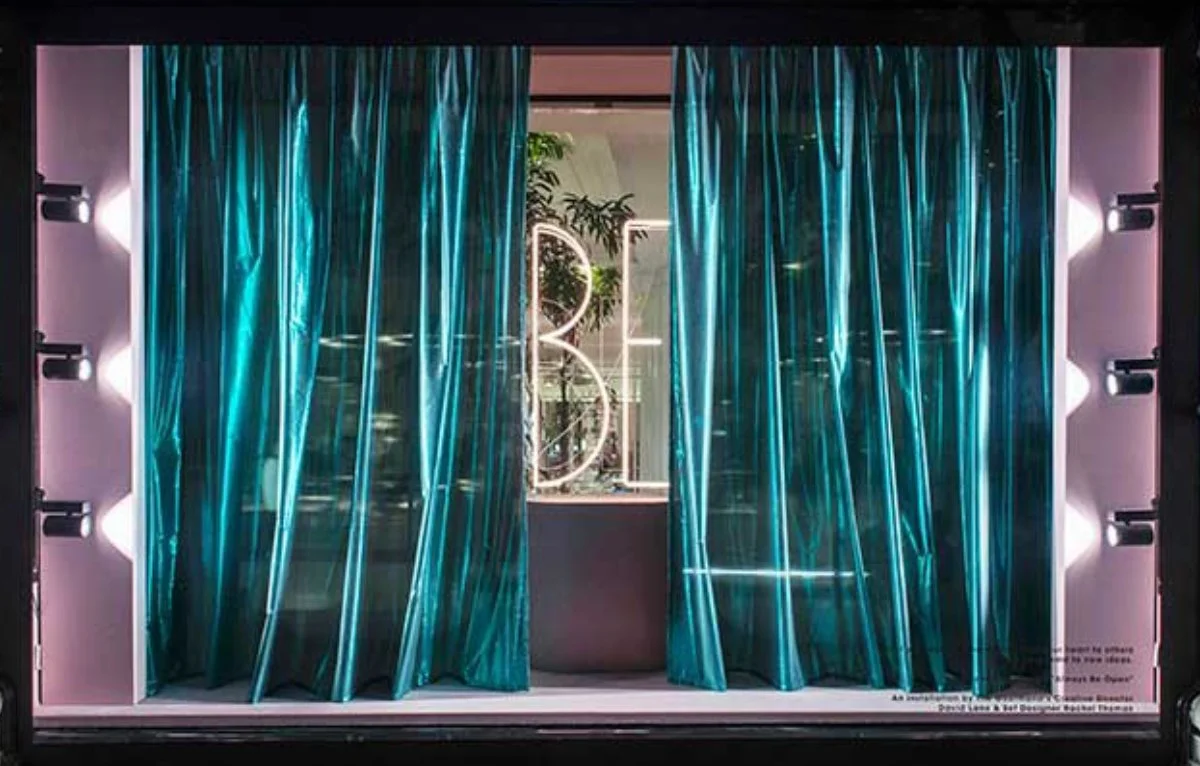
Selfridges, christmas 2016 (source etnow)
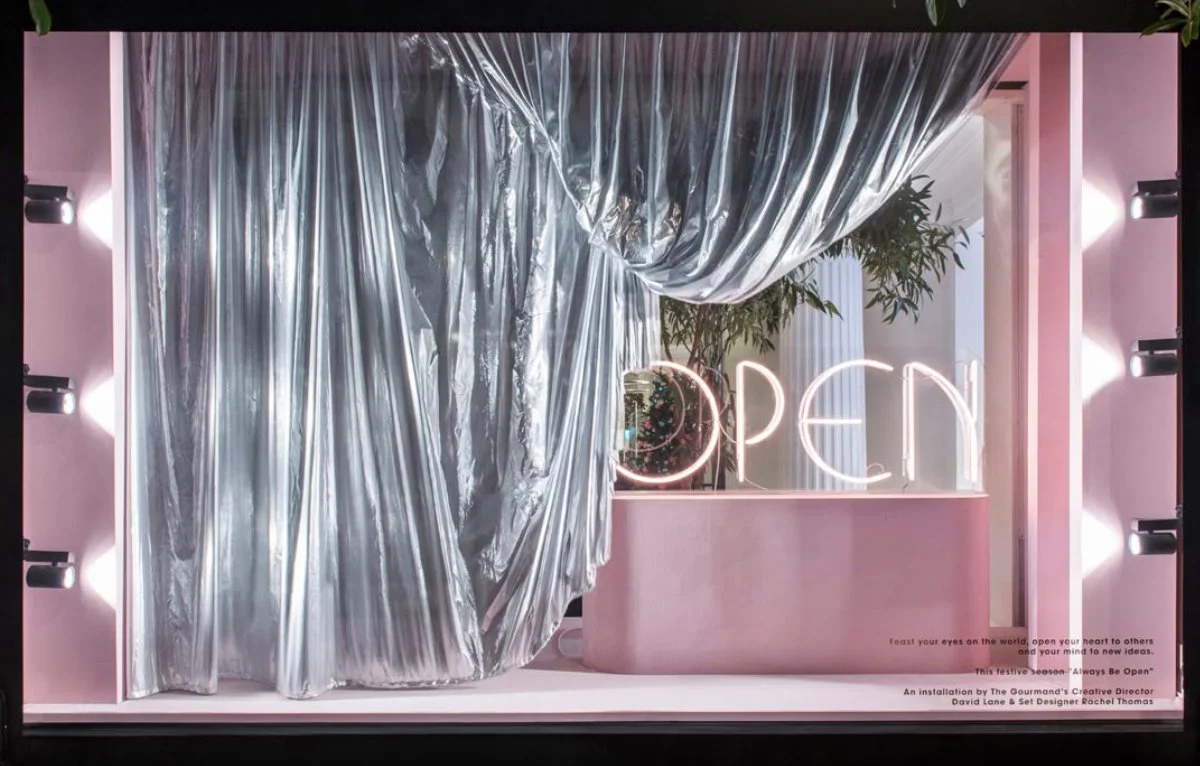
Selfridges, christmas 2016 (source etnow)
02. STRETCH FABRIC STOREFRONTS (Architectural Tension)
If drapes feel too classic, tensioned fabrics offer a radically modern, dynamic alternative. By stretching nylon spandex or metallic fabrics across a window, you create sharp geometric planes that catch the light beautifully.
The Luxury Event Vibe
Simple stretch sails—often used in event design—can look incredibly high-end when shaped creatively and illuminated with precise directional lighting, as seen in Harrods' fashion displays.
The Technical Aesthetic
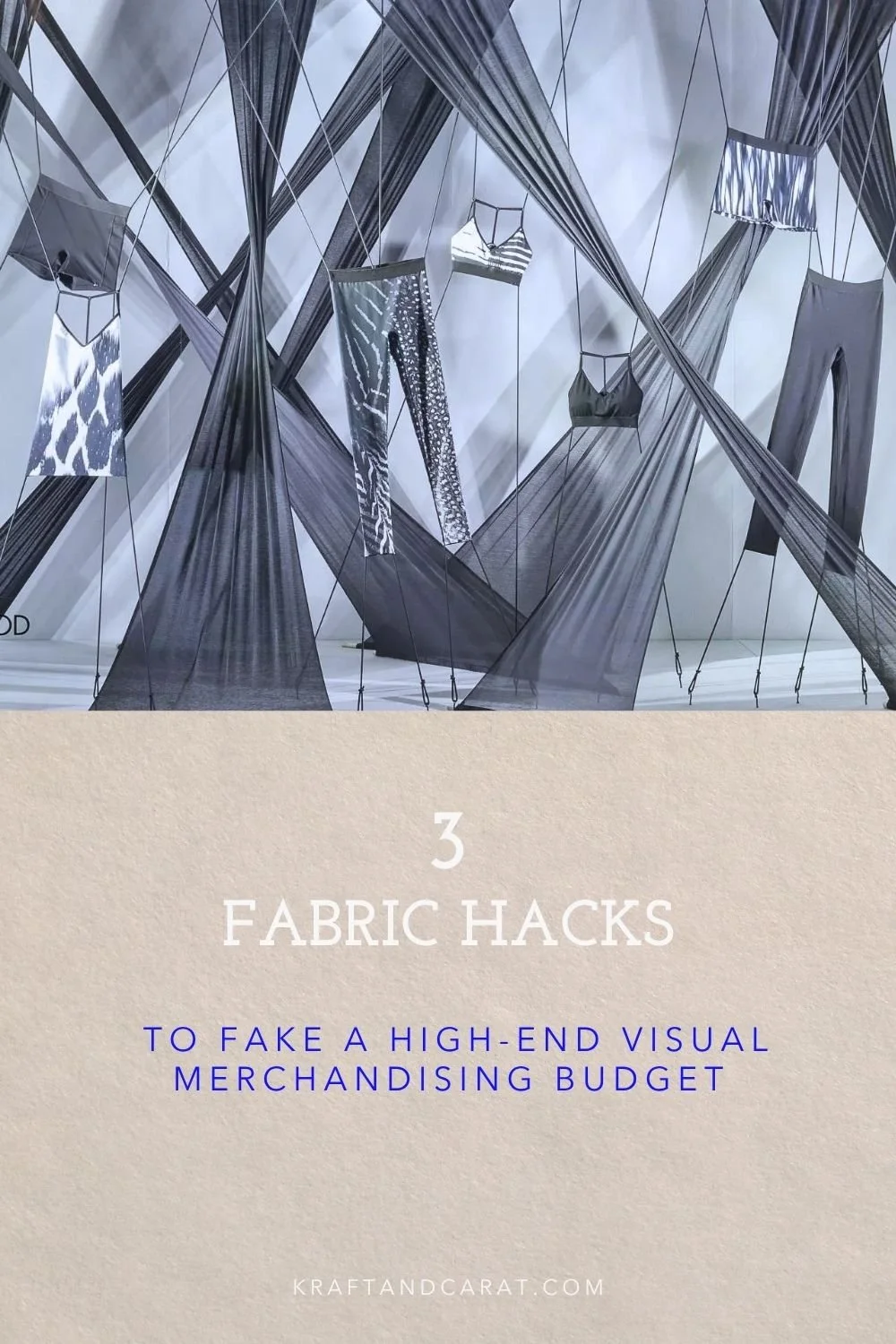
Selfridges perfectly matched their props to their products in a sports campaign, using taut, high-performance stretch fabrics to echo the technical athletic wear displayed in the window.
The Avant-Garde Grid
For the Dom Pérignon x Lady Gaga takeover at Harrods, designers stretched pleated metallic fabric strips across the window. Sitting somewhere between a curtain and a tensioned sail, this structural arrangement created an edgy, contemporary architectural matrix.
✎ PRO TIP: The Anchor Check
Tensioned fabrics look cheap the second they sag. This aesthetic requires flawless execution. Before committing to this look, ensure your storefront ceiling and floor have solid, reliable anchor points to maintain extreme tension for the duration of the campaign.
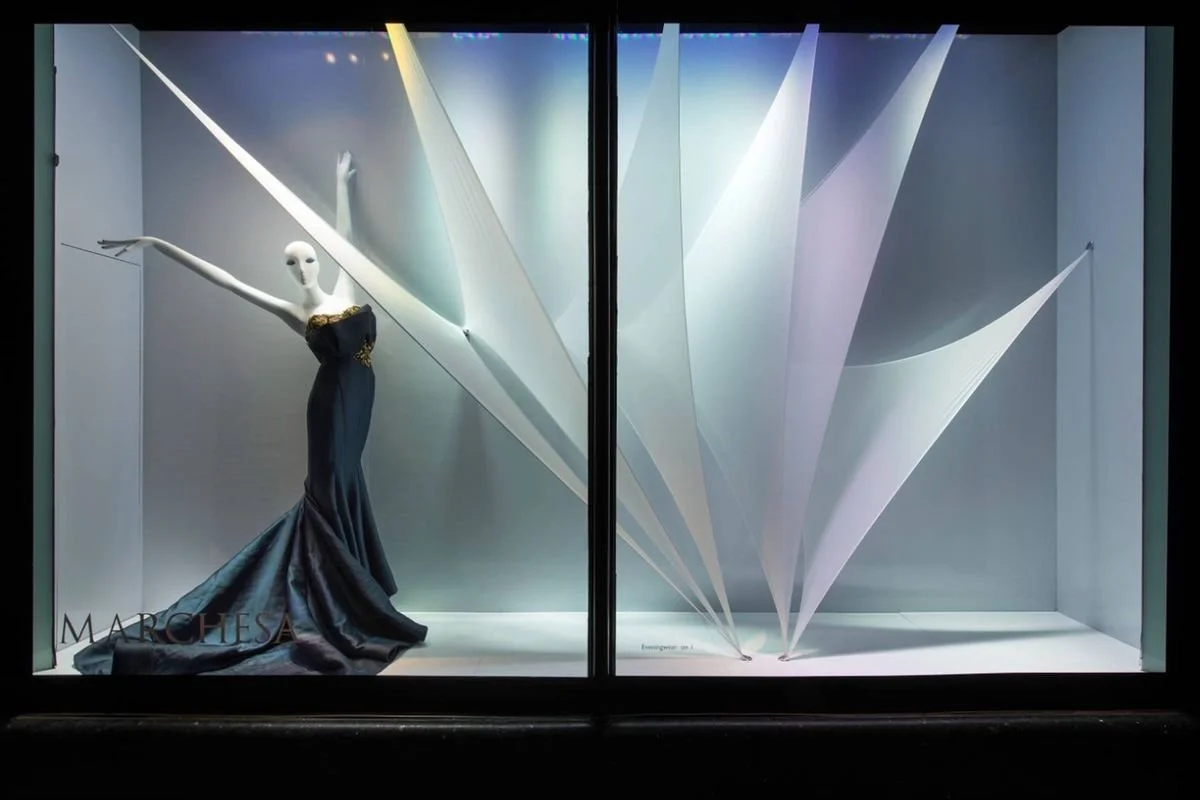
Harrod’s (photo Jess Gillespie)
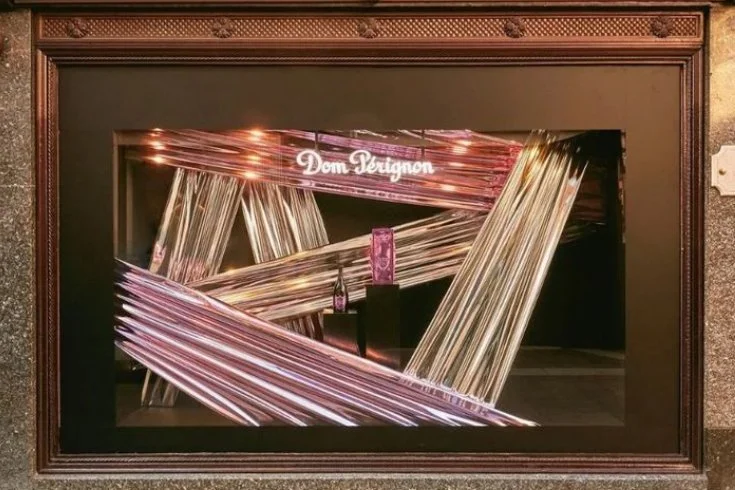
Dom Perignon x Lady Gaga, Harrod’s
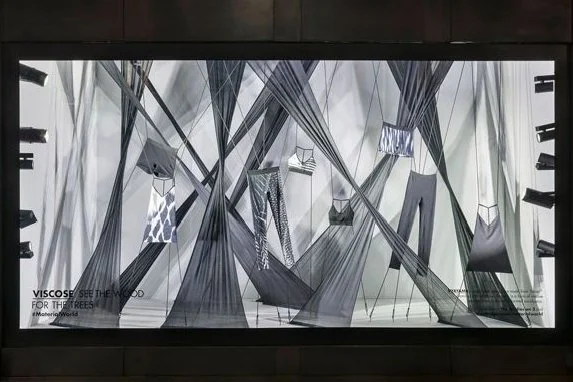
Selfridges (source Retail Design Blog)
03. CUSTOM TULLE PROPS (Sculptural Volume)
While drapes and stretch fabrics require strict execution, tulle is the ultimate for creating custom storefront props. It is inexpensive, lightweight, and can be sculpted into massive organic shapes that fill vertical space effortlessly.
The Cloud Effect
Chanel has famously used gathered white tulle to create monumental, poetic clouds suspended above their collections, proving that luxury is about vision, not expensive materials.
The Ethereal Christmas Tree
Tulle isn't just for spring. To illustrate this, the Studio generated an AI concept render below: fluffy surrealist Christmas trees crafted entirely from gathered light pink and white tulle. It’s an avant-garde alternative to the traditional green pine.
☉ PSYCHO TIP: The Art of Negative Space
Because tulle allows you to create massive volume so easily, the danger is suffocating the window. Always leave empty "negative space" around your tulle sculptures so the eye can rest, and the product remains the true hero.
(Want to structure your tulle clouds easily? Hide inexpensive wooden [Embroidery Hoops] inside the fabric to give them a perfect circular frame before hanging them from the ceiling!)
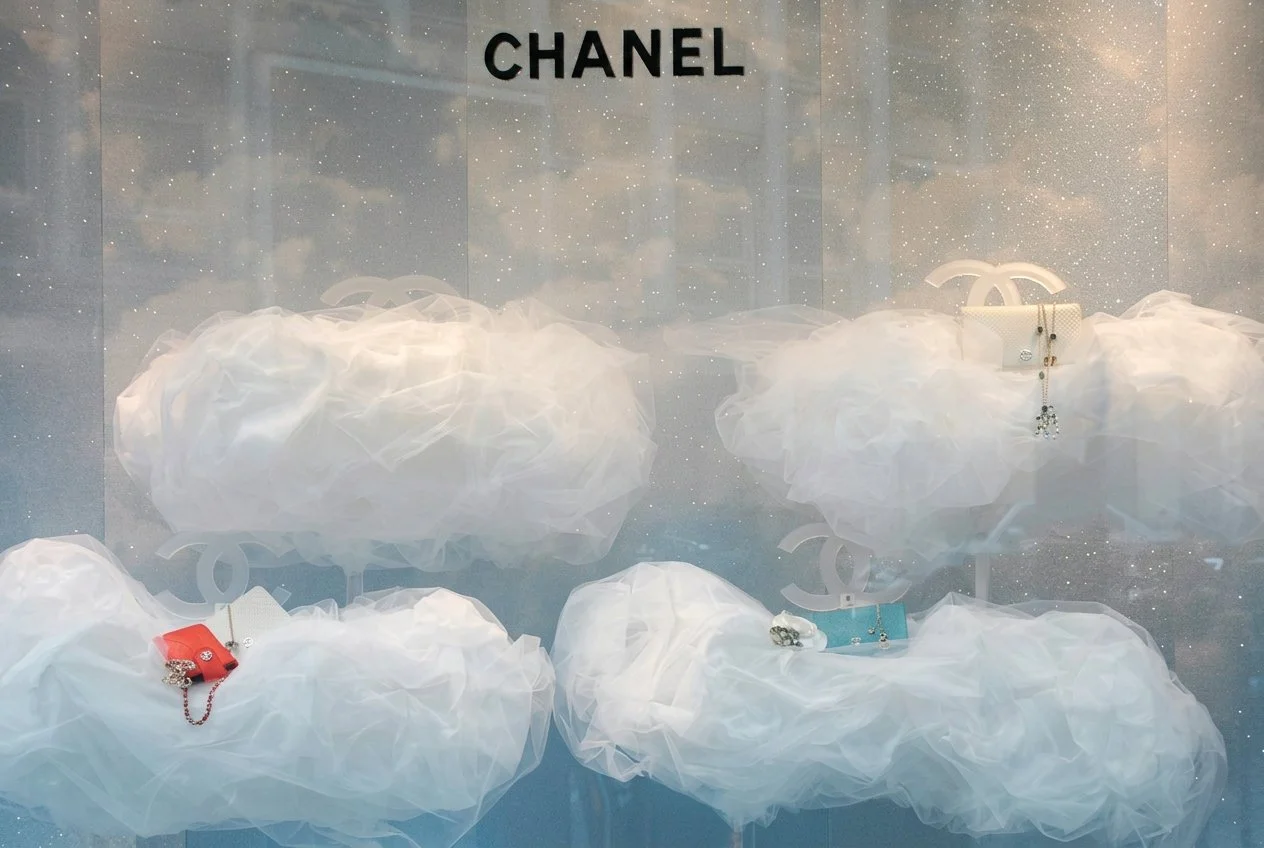
Chanel tulle cloud (photo Kraft & Carat)
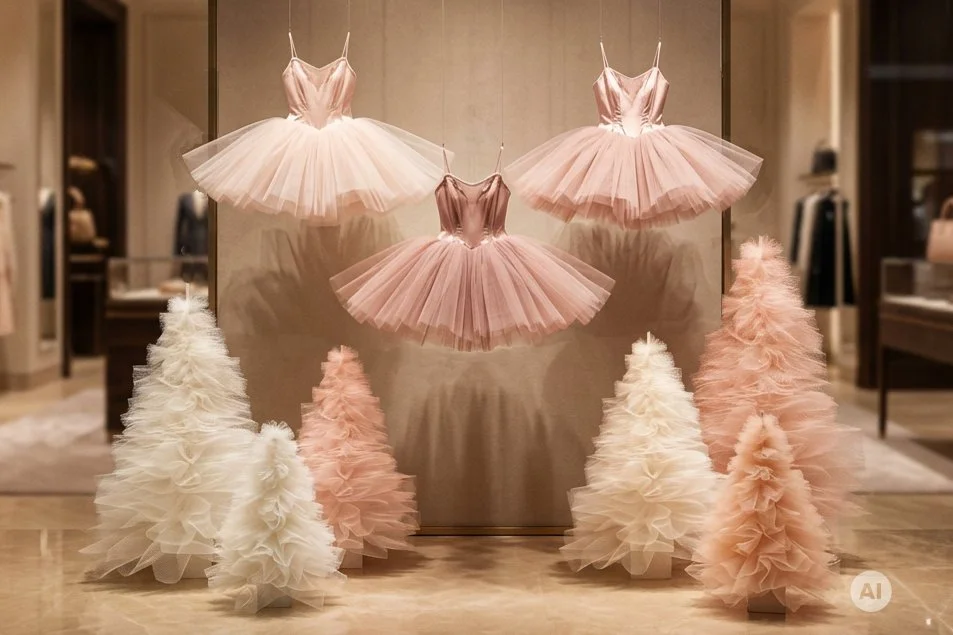
AI Conceptual Render by Kraft & Carat
READY TO ELEVATE YOUR OWN STOREFRONT?
Fabric can transform your boutique, but sourcing the right material is only 20% of the work. The remaining 80% comes down to spatial composition, focal points, and lighting. Even the most beautiful velvet drape will fall flat if the storefront foundations are wrong.
Before you start hanging your organza, ensure your display meets premium luxury standards.

Pin for inspiration, or share these retail strategies with your network.