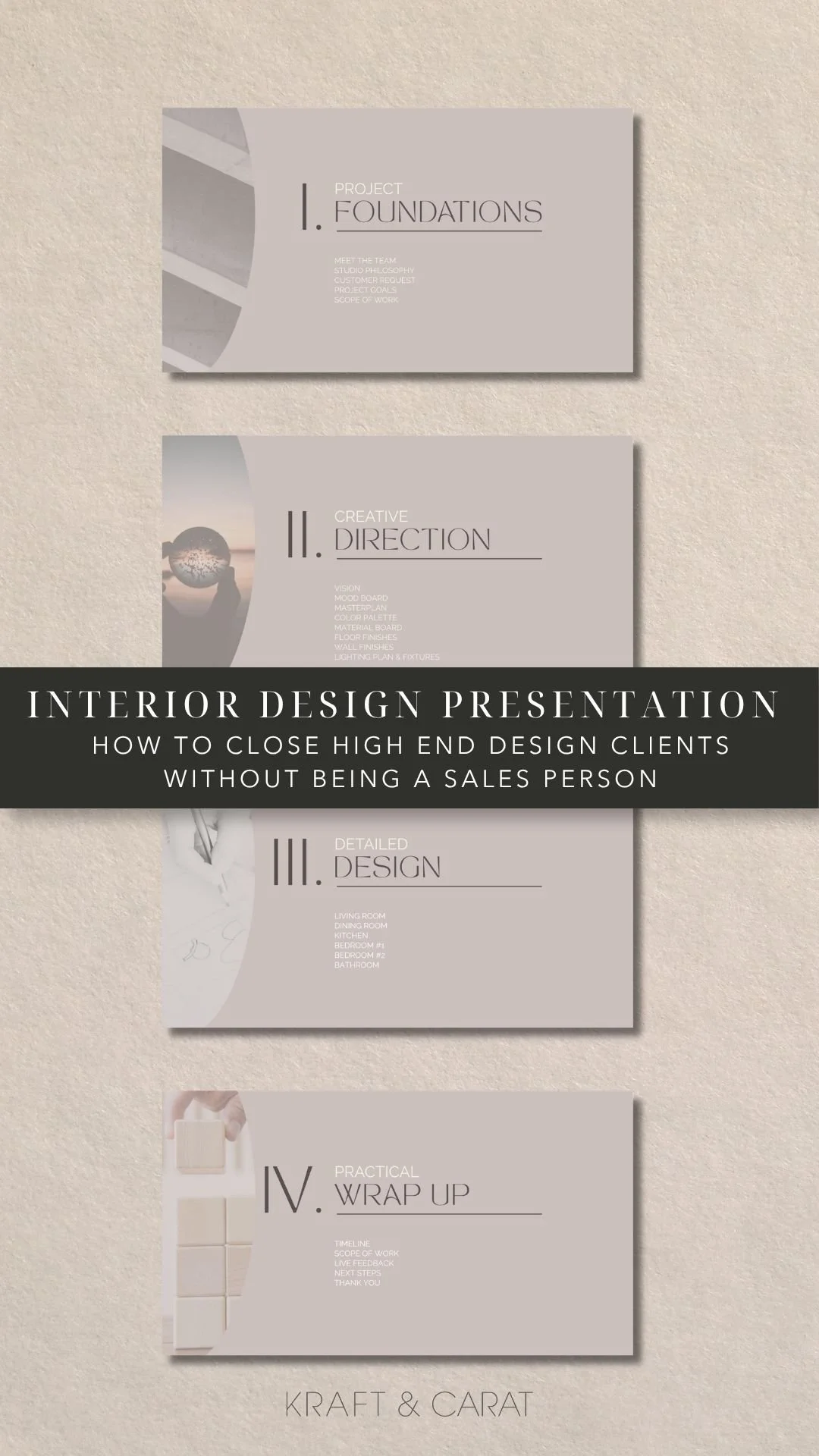
The 4-phase interior design presentation framework
Each selection is carefully curated with an independent eye, guided by a desire to highlight thoughtful, timeless and inspiring pieces.
Curator's Note: As a Paris-based studio, most edits highlight some of my favorite European-accessible design houses...
There is a distinct difference between pitching an idea and presenting a fully realized project.
While initial moodboards are meant to dream and explore (see our dedicated post here), the Detailed Client Presentation is where the real business happens. This is the decisive meeting where you transition from "creative visionary" to "project manager." It is where you must align on concrete floor plans, lock in specific furniture pieces, define the exact timeline, and most importantly, discuss the budget without triggering "sticker shock."
Many talented designers struggle at this stage because their presentations lack a strategic structure. They jump straight into showing furniture without setting boundaries, leading to scope creep and endless revisions.
At Kraft & Carat, we treat the final presentation as a carefully orchestrated scenography. To help you guide your clients seamlessly from the initial brief to the final invoice, we are lifting the curtain on our exact 4-Phase Presentation Framework.
1. THE FOUNDATIONS (building trust & alignment)
Before diving into floor plans, you must build trust and ensure absolute alignment. This phase sets the stage. Start by introducing your studio’s philosophy and the specific team dedicated to their home. Then, most importantly, restate the Customer Request and the Project Goals.
Curator’s Tip: When clients see their own words and desires reflected on the very first slides, they feel deeply heard. It lowers their defensive barriers and builds immediate trust for the design process that follows.
2. THE CREATIVE DIRECTION (The Emotional Anchor)
Before revealing the new design, briefly remind them of the approved aesthetic. Recap the initial moodboard, the core color palette, and the "why" behind the design.
Curator's Tip: Reminding clients of what they already approved in the previous phase creates a psychological safety net. When they see the detailed design in the next step, they will recognize it as the logical evolution of their own choices.
3. DETAILED DESIGN (The Concrete Reality)
This is the core of the presentation. No more "illusion of choice" or approximative AI concepts—this is the exact, concrete execution.
Spatial Planning: Present clear, realistic 2D or 3D floor plans.
Room by Room Sourcing: Showcase the exact furniture, lighting, and hardware selected for each space. Pair these with material swatches (wood finishes, fabrics, paint codes) so the client can truly visualize the tactile reality of the room.
4. THE WRAP UP (Logistics & Investment)
Once the client is in love with the creative vision, it is time to put on your project manager hat. This is where you outline the concrete execution to prevent any future misunderstandings.
Scope of Work & Timeline: Clearly define exactly what is (and isn't) included in the project moving forward, and present a visual project schedule. A confused client is a difficult client.
The Investment Breakdown: We never call it a "cost"; we call it an "investment." Present the budget transparently, broken down by room or category.
Next Steps: Maintain the driver's seat. End the meeting by detailing exactly what happens next (e.g., signing the final approval and initiating the ordering phase) to keep the momentum going.
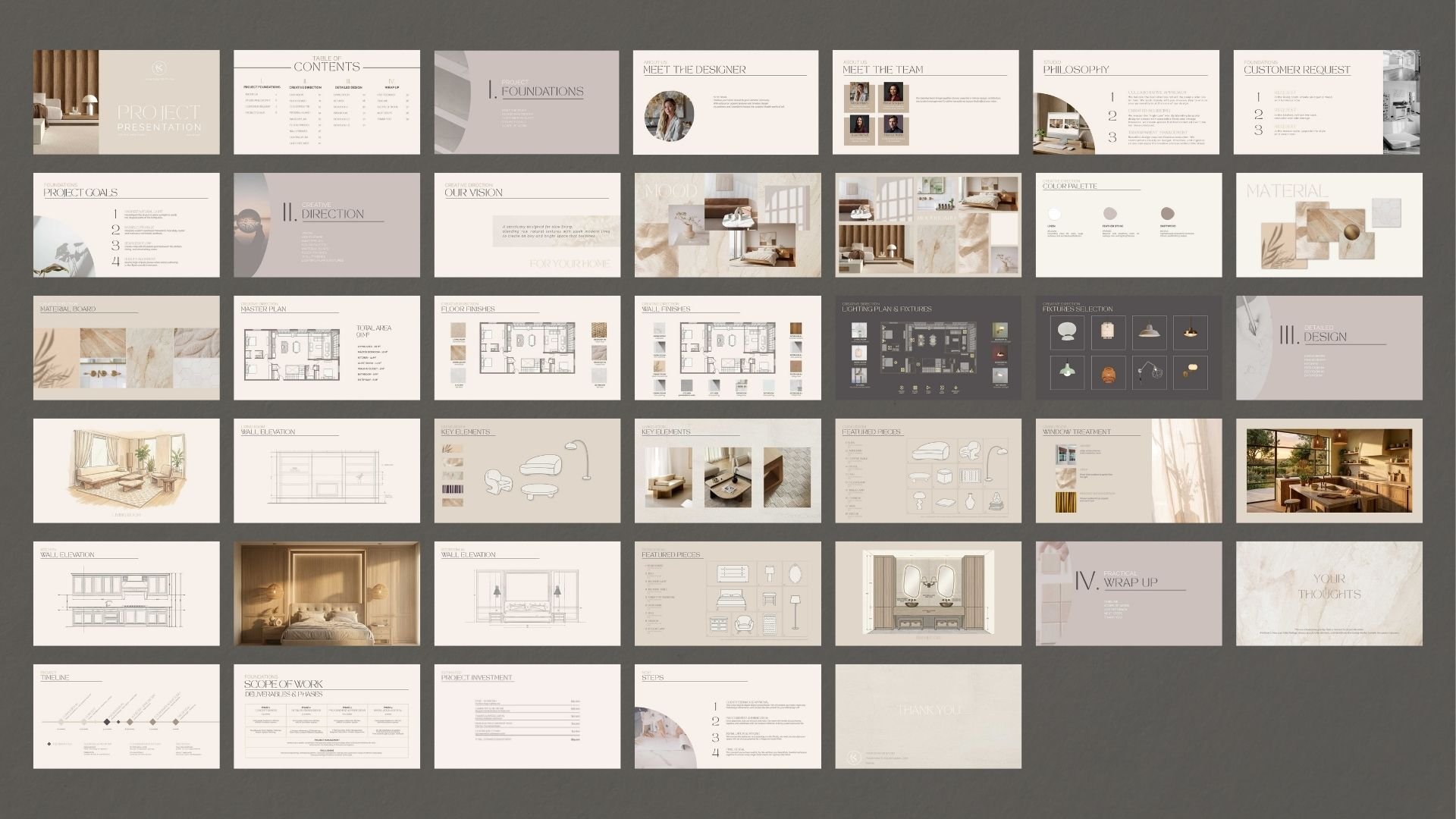
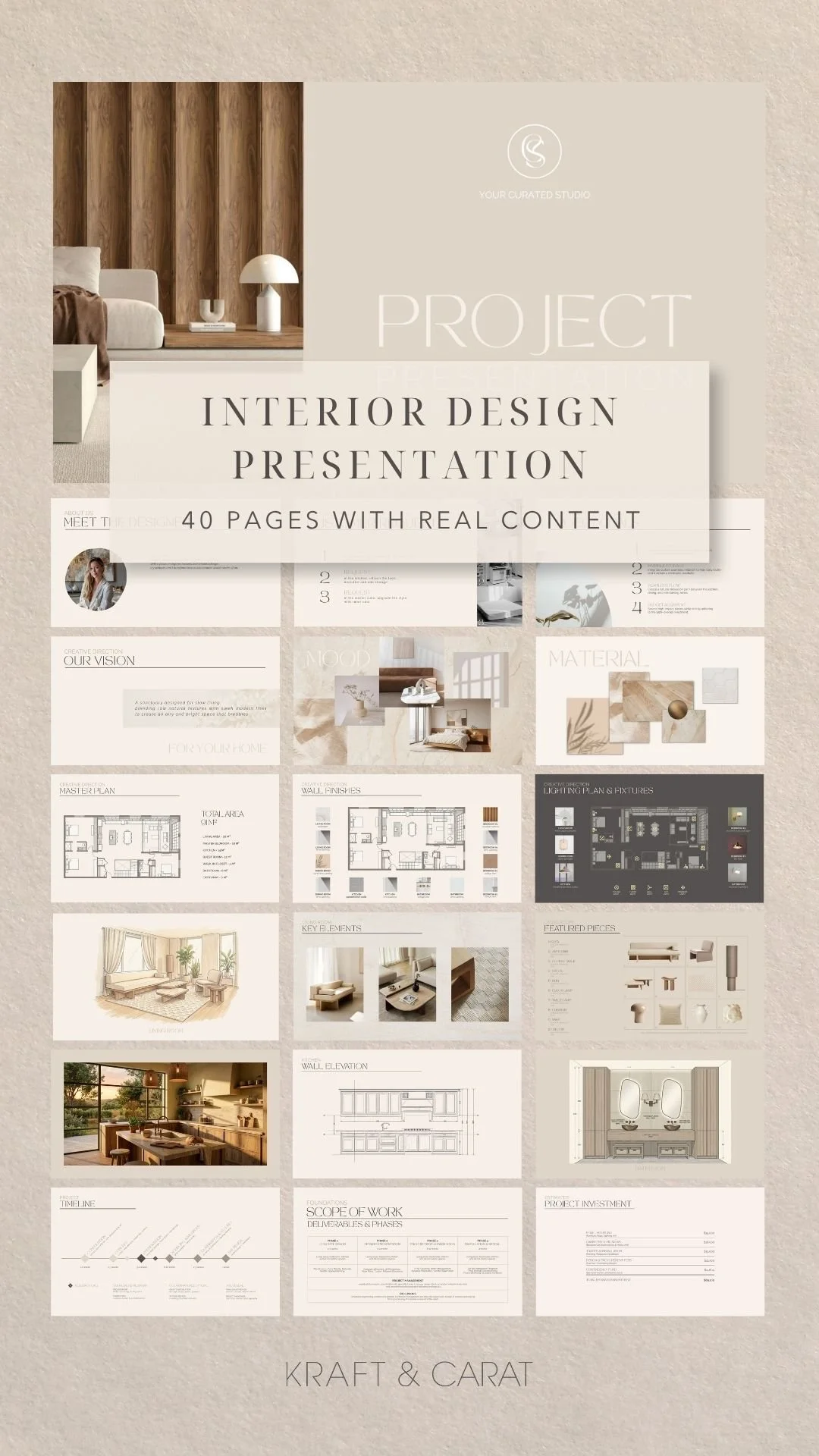
The Ultimate Tool: Our 40-Page Presentation Deck
Knowing the framework is one thing; designing 40 pages from scratch for every client is another.
To help virtual designers, e-designers, and interior architects reclaim their time, we have packaged this exact 4-phase methodology into our most comprehensive studio tool yet: The Interior Design Client Presentation Deck.
☞ Discover the 40-Page Presentation Template Here
Why this template is different:
NO LOREM IPSUM: We hate templates filled with fake Latin text. This deck is pre-filled with real, strategic copywriting. From the "Scope of Work" phrasing to the "Investment" breakdown, the words are written for you.
Built-in Mentor Tips: Scattered throughout the Canva file, you will find hidden "Pro Tips" guiding you on how to verbally pitch specific slides, handle budget objections, and manage client psychology.
The Organic Modern Aesthetic: 40 cohesive, editorial layouts (in 16:9 animated format + printable A4 et us letter format) featuring our signature architectural placeholders (no empty frames).
Stop building presentations from scratch. Plug your designs into a proven, high-end framework, and start presenting your projects with the authority of a top-tier agency.
Don’t forget to share or save...